10 Best AI Visibility Tools in 2026 (and How to Actually Show Up in AI Search)

AI visibility tools track how often AI systems mention, cite, or recommend a brand for a defined set of prompts. The best AI visibility tools help teams compare brand mentions, citations, sentiment, competitor share of voice, AI referral traffic, and the content work required to improve those signals.
The right choice depends on the job: Zerply fits teams that want monitoring tied to content execution; Profound suits enterprise intelligence; Similarweb adds market and referral context; Peec AI supports agency reporting; and Otterly.AI offers a lower-cost entry point.
Disclosure and verification: Zerply publishes this comparison and is one of the products reviewed. We evaluated publicly documented features, pricing, engine coverage, workflow fit, and material limitations. We did not treat vendor claims as independent test results. Product details were last checked on August 18, 2026; verify the current plan before buying.
What is an AI visibility tool?
An AI search visibility tool monitors answers from systems such as ChatGPT, Google AI Mode, Google AI Overviews, Gemini, Perplexity, Claude, and Copilot. Depending on the product, it may track brand mention rate, citations, answer position, sentiment or stance, competitor share of voice, referral traffic from AI surfaces, AI Overviews tracking, or AI crawler visits.
These signals answer different questions. Prompt tracking reruns selected questions and records the responses. Mention rate is the percentage of tracked responses that name a brand. A citation is a linked or attributed source used in an answer. Sentiment or stance classifies how the answer describes the brand. Share of voice estimates a brand's visibility relative to competitors across the tool's prompt sample.
Answer engine optimization (AEO), also called generative engine optimization (GEO), is the work of improving whether and how a brand appears in AI-generated answers. That is why AI brand visibility tools need to show both the answer output and the sources shaping it.
How we evaluated the tools
We assessed six buyer-facing criteria:
- AI engine coverage
- clarity of the collection method
- citations and stance data
- competitive analysis
- ability to turn findings into action
- total cost at a usable prompt volume.
Each platform was compared on how well it supports real buying decisions rather than on vendor claims alone. We favored official product, pricing, and help documentation over unsourced roundups.
This is a documented feature comparison, not a controlled benchmark. A defensible accuracy test would require the same prompts, locations, logged-in state, model versions, and repeated runs across every product.
Even then, AI answers vary. Because each vendor uses different prompts, engines, run frequency, weighting, and locations, no visibility score is a universal market measure. Use each platform's score to measure change within that platform rather than comparing a score of 70 in one tool with 70 in another.
Best AI visibility tools by use case
| Tool | Best fit | Engines covered on standard plans | Free trial | Public price signal* | Main caveat |
|---|---|---|---|---|---|
| Zerply | Monitoring connected to SEO research, content creation, publishing, and AI crawler analytics | Major AI answer surfaces; Claude varies by tier | 7 days | Free plan; paid plans from $41/month | Engine access and allowances vary by plan |
| Profound | Enterprise prompt, source, and shopping intelligence | ChatGPT only on Starter; three engines on Growth | Verify | Starter $99/month billed yearly | Starter tracks ChatGPT only and 50 prompts |
| ZipTie | Focused monitoring across three major AI surfaces | Google AI Overviews, ChatGPT, Perplexity | 14 days | From $69/month | Narrower engine coverage than some rivals |
| Otterly.AI | Lower-cost prompt and citation monitoring | ChatGPT, AI Overviews, Perplexity, Copilot; Gemini, AI Mode, Claude (add-on) | Verify | From $29/month | Gemini, AI Mode, and Claude may require add-ons |
| Peec AI | Agency pitches, client workspaces, and reporting | Coverage has changed; see entry | Verify | Credit-based; verify current quote | Public pricing and model coverage change frequently |
| Similarweb AI Search Intelligence | AI referral and market context | ChatGPT, Google AI Mode, Gemini, Perplexity | Verify | From $99/month billed yearly | Brand-tracking and referral coverage are not identical |
| Semrush AI visibility products | Teams already using Semrush | Custom prompt tracking; see entry | Verify | Verify current package | Per-domain, prompt, and add-on costs can increase spend |
| Ahrefs Brand Radar | Large-scale competitive brand benchmarking | AI and other discovery surfaces; modular by platform | Verify | Verify selected-platform configuration | Visibility and impressions may be modeled, not traffic |
| Clearscope | Content optimization with AI mention tracking | Narrower than dedicated trackers; see entry | Verify | From $129/month | Narrower multi-engine monitoring scope |
| SE Visible | Straightforward agency and multi-brand reporting | ChatGPT, Gemini, Perplexity, Google AI Mode, Google AI Overviews | 10 days | From $99/month | Data refreshes weekly |
Public pricing checked August 18, 2026. Annual billing, prompt limits, engines, seats, brands, countries, and add-ons differ, so starting prices are not directly equivalent. Engine and trial entries marked "Verify" are not documented in the sources we reviewed and should be confirmed with the vendor.
The 10 best AI visibility tools in 2026
1. Zerply: Overall best AI Visibility tool
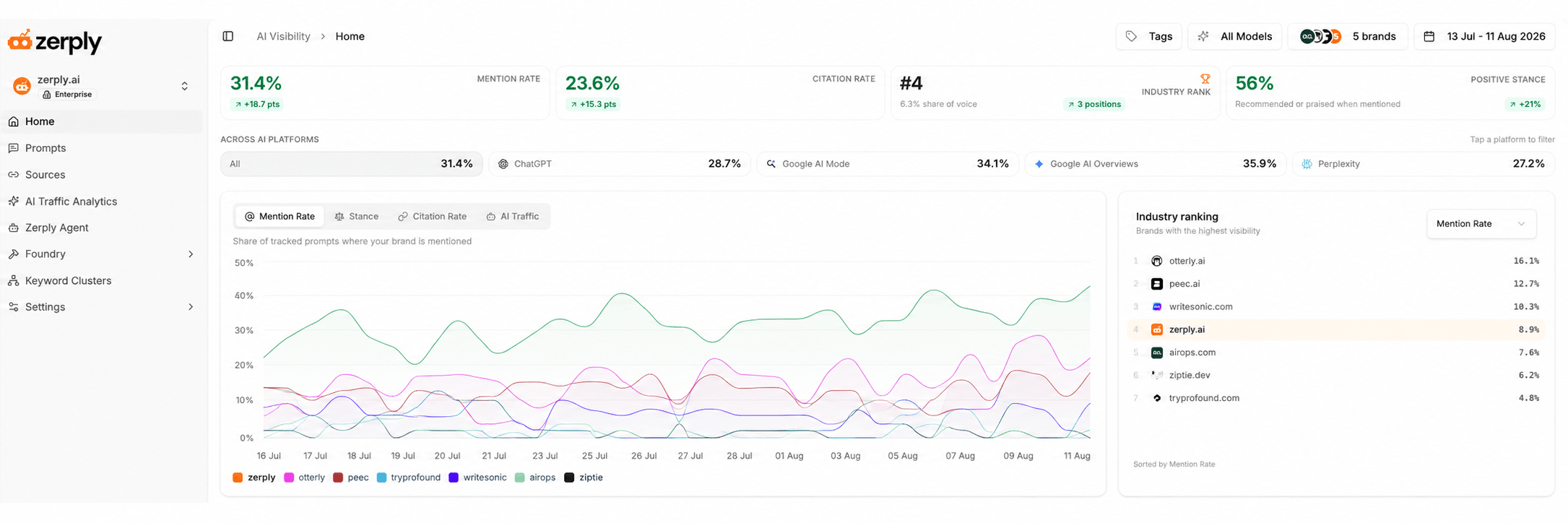
Zerply is built for marketing and SEO teams that want one workflow for identifying AI visibility gaps, creating or improving the right pages, publishing them, and measuring whether visibility improves. It is the strongest fit when the team needs monitoring and execution in the same platform rather than another reporting dashboard.
Zerply connects prompt monitoring directly to content execution. Instead of just exporting reports like basic AI visibility tools, Zerply is built for in-house SEO teams and agencies that need to optimize, publish, and track content changes inside a single workflow. It serves as an active execution stack rather than a static reporting dashboard.
Pros:
- Combines Unified AEO Tracking, Infrastructure-Layer AI Bot Analytics, and Foundry content execution in one workflow.
- Tracks brand presence, share of voice, citations, stance, and context-role classification across major AI answer surfaces.
- Records AI bot requests at the server layer without adding JavaScript to the site.
- Turns visibility gaps into schema-rich, sitemap-ready pages published to a subpath on the domain.
- Connects AI visibility data with SEO research and Google Search Console, reducing handoffs between monitoring, diagnosis, and execution.
- Uses AI agents to move from research and drafting to optimization and publishing in the same workspace.
Cons:
- The broader workflow is most valuable for teams that will actually use the publishing and content execution layer.
- A solo operator that only needs to check a few prompts may not need the full platform.
Pricing: Zerply offers Starter plan at $41/month, Pro plan at $166/month and Business plan at $249/month. The only major difference between the plans is the number of prompts tracking, availability of chat credits, and priority customer support.
Start monitoring your AI visibility with Zerply. Get Started
2. Profound: best for enterprise intelligence
Profound is designed for larger brands that need segmented prompt intelligence, source analysis, governance, and shopping visibility. It belongs on an enterprise shortlist when the buying team needs visibility data across markets, personas, topics, and product lines.
Profound sits at the enterprise end of the market, focusing on deep segmentation, source analysis, and shopping visibility. As one of the leading AI visibility tracking tools, it supports analyst-led decision making rather than simple brand checks, making it a strong candidate for larger organizations tracking complex product lines across multiple regions. It functions as an intelligence layer to be placed alongside platforms like Similarweb rather than a content execution tool.
Pros:
- Documents rank, share of voice, cited sources, sentiment, and segmentation by topic, persona, region, language, and country.
- Extends monitoring into AI shopping experiences through product visibility, attributes, merchant distribution, and shopper sentiment.
- Supports sophisticated market and competitive intelligence for enterprise teams with analyst capacity.
Cons:
- Lower-tier limits can be restrictive for smaller teams that need more than ChatGPT or a larger prompt set.
- Profound delivers intelligence rather than content briefs, page updates, or publishing.
- Teams still need someone to translate prompt gaps into content decisions and get the work live.
- Organizations without execution capacity should budget for that layer separately.
Pricing: Starter costs $99 per month billed yearly and includes ChatGPT tracking for 50 prompts. Growth costs $399 per month billed yearly and expands to three answer engines and 100 prompts. Broader engine coverage, SSO, and enterprise controls sit on tailored plans.
3. ZipTie: best for focused three-engine monitoring
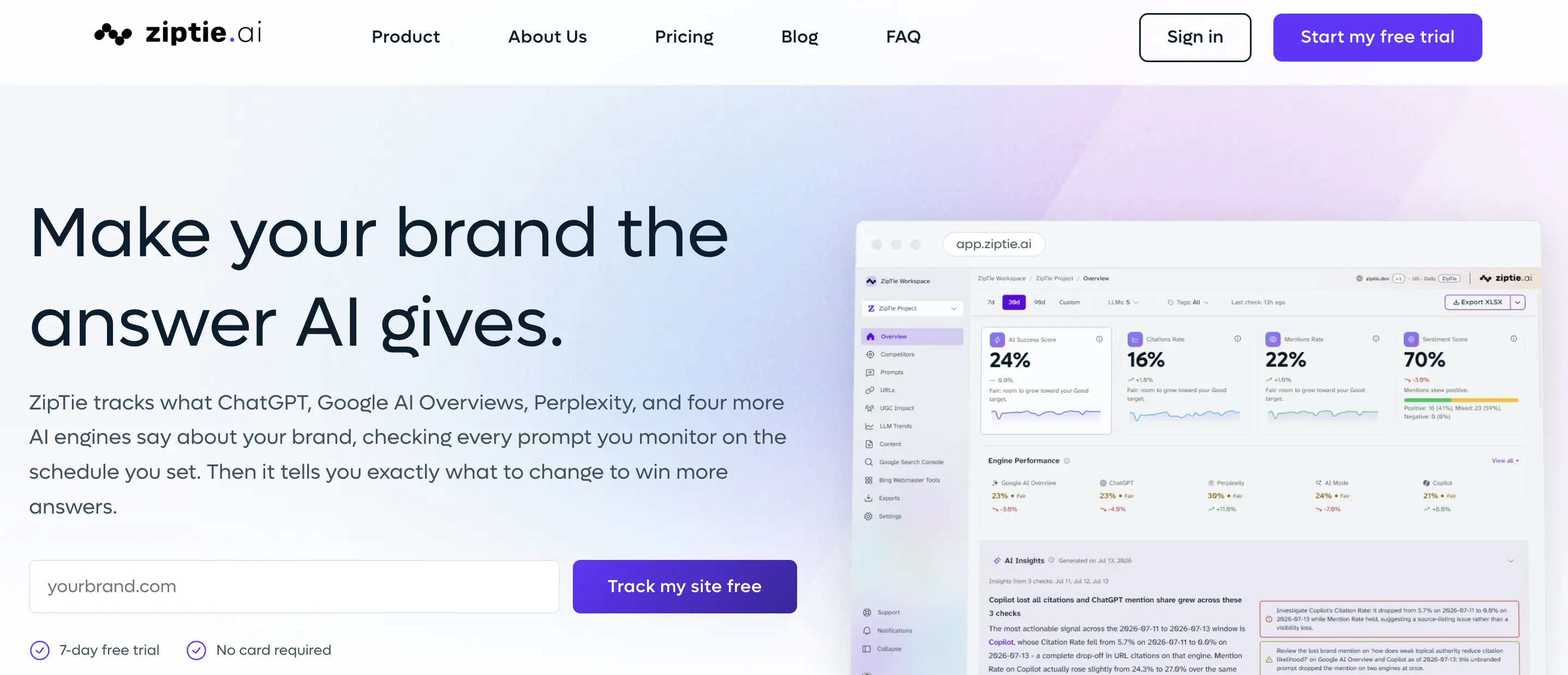
ZipTie is a practical option for teams focused on Google AI Overviews, ChatGPT, and Perplexity. It is useful for buyers that want focused monitoring across three major AI surfaces without paying for a broader intelligence suite.
ZipTie is a practical, focused AI visibility tool for Google AI Overviews, ChatGPT, and Perplexity. It avoids the bloat of larger intelligence suites by focusing on these three core surfaces. It is built for teams that need straightforward prompt monitoring and citation checking without paying for advanced market intelligence or built-in content publishing.
Pros:
- Documents AI search checks, citation monitoring, response history, reporting, and content optimization suggestions.
- Offers comparatively simple plans, which makes budgeting easier for teams that only need the covered engines.
- Includes a 14-day trial, giving buyers time to test a fixed prompt set before committing.
Cons:
- Less suitable when Claude, Gemini, Copilot, or Google AI Mode must be included in the same standard package.
- Browser-based collection claims should be treated as vendor-reported unless the buyer validates the method directly.
- Teams that need broader market intelligence or an integrated publishing workflow may outgrow the tool.
Pricing: Basic, Standard, and Pro plans are listed at $69, $99, and $159 per month, with a 14-day trial.
4. Otterly.AI: best AI Visibility tool built for freelancers and smaller teams
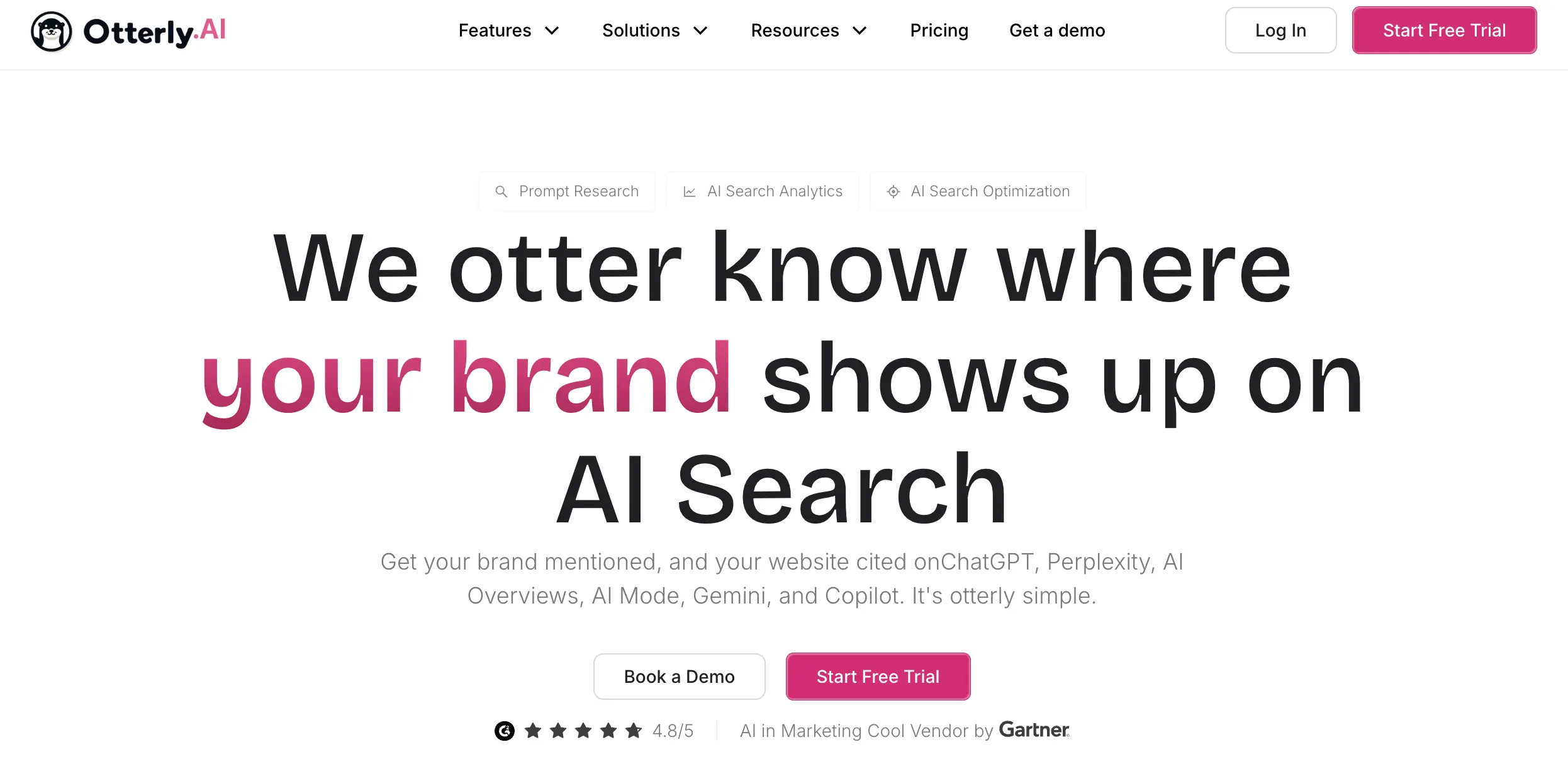
Otterly.AI is an AI Visibility tool built for freelancers and smaller teams, giving them an accessible way to track brand mentions, citations, rankings, and competitors. It deserves consideration when the primary requirement is low-cost prompt and citation monitoring.
Otterly.AI is a budget-friendly option for freelancers and small teams starting with prompt and citation monitoring. While standard plans track ChatGPT, AI Overviews, Perplexity, and Copilot, other major engines like Gemini and Claude require paid add-ons. It is a lightweight choice among AI search visibility tools for teams that want basic brand-presence checks without a high upfront investment.
Pros:
- Covers brand visibility, link citations, domain rankings, GEO audits, exports, prompt research, and optimization recommendations.
- Gives small teams a low-cost way to begin monitoring AI visibility before committing to a larger platform.
- Works well for freelancers and smaller teams that need basic prompt and citation monitoring.
Cons:
- The starting price does not include every engine.
- ChatGPT, Google AI Overviews, Perplexity, and Copilot appear in core coverage, while Gemini, Google AI Mode, and Claude may be paid add-ons.
- The $29 plan can become a misleading floor for teams that need complete multi-engine coverage.
Pricing: Monthly pricing starts at $29 for 15 prompts, with higher limits available on larger plans. Buyers should verify which engines are included in the selected package and which require add-ons.
5. Peec AI: AI Visibility Tool best for agency pitches and client reporting
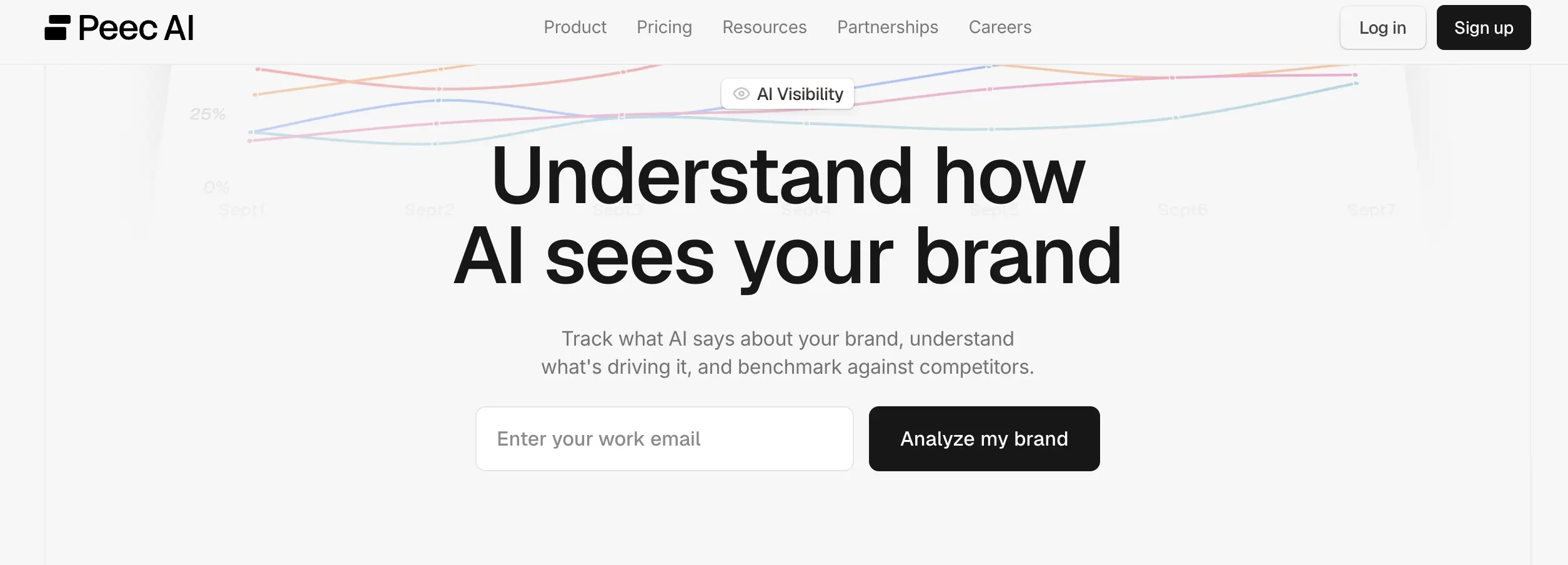
Peec AI is a strong agency fit when prospect benchmarking, client workspaces, and presentation-ready reporting are central to sales and delivery. Agencies that need to turn AI visibility findings into client-facing reporting and pitch assets should review it closely.
Peec AI is designed specifically for marketing agencies, prioritizing client workspaces, prospecting reports, and pitch tools over deep execution features. It ranks among the top AEO tools for AI search visibility for agency teams that need presentation-ready visibility data and multi-brand reporting to win and retain clients.
Pros:
- Offers pitch projects that can become client projects after a deal closes.
- Documents mention rate, average position, citations, sentiment, competitors, daily updates, exports, client seats, API access, MCP, and Looker Studio support on eligible plans.
- Fits recurring client reporting and new-business conversations for agencies.
Cons:
- Public pricing and model coverage have changed more than once, so a live quote is the only reliable figure.
- Peec AI is primarily a reporting and monitoring layer.
- Teams seeking content production, publishing, and ongoing page optimization will still need an execution workflow outside the platform.
Pricing: Peec uses annual and credit-based packaging. Current public prices should be verified directly before buying, especially for agencies managing multiple clients, brands, or markets.
6. Similarweb AI Search Intelligence: best for referral and market context
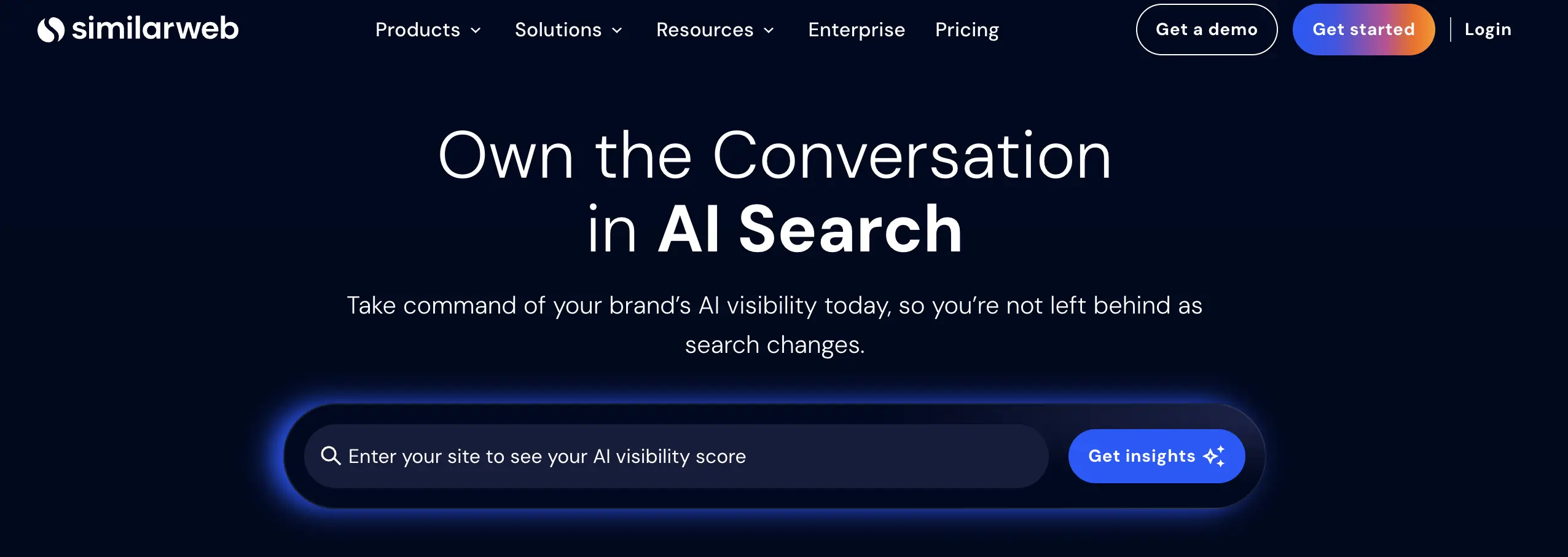
Similarweb AI Search Intelligence suits strategy and analytics teams that want to connect AI brand visibility with referral traffic and wider market intelligence. It fits organizations that already think in terms of market share, competitive traffic, and cross-channel discovery.
Similarweb integrates AI visibility with its broader competitive and referral traffic datasets. This allows strategy and growth teams to see not just whether they appeared in an AI answer, but also how that appearance correlates with actual referral traffic and overall market share. It is a powerful analytical option for teams evaluating ai search analytics platforms.
Pros:
- Documents prompt tracking, citations, sentiment, competitor benchmarking, and source analysis across ChatGPT, Google AI Mode, Gemini, and Perplexity.
- Adds referral and market context that many pure prompt trackers do not provide.
- Fits strategy and analytics teams that already work with market share and competitive traffic data.
Cons:
- Brand tracking and AI referral coverage are related but not identical.
- Referral counts show that AI surfaces sent traffic, but they do not reveal which prompts produced the answer or how the brand was framed inside it.
- Similarweb's broader AI traffic data may cover more referral sources than its prompt-level brand tracking product, so buyers should confirm exactly what each package includes.
Pricing: Public pricing lists AEO Intelligence at $99 per month billed annually or $129 monthly. A package that adds AI Brand Visibility is listed at $333 per month billed annually or $399 monthly.
7. Semrush: best for existing Semrush workflows
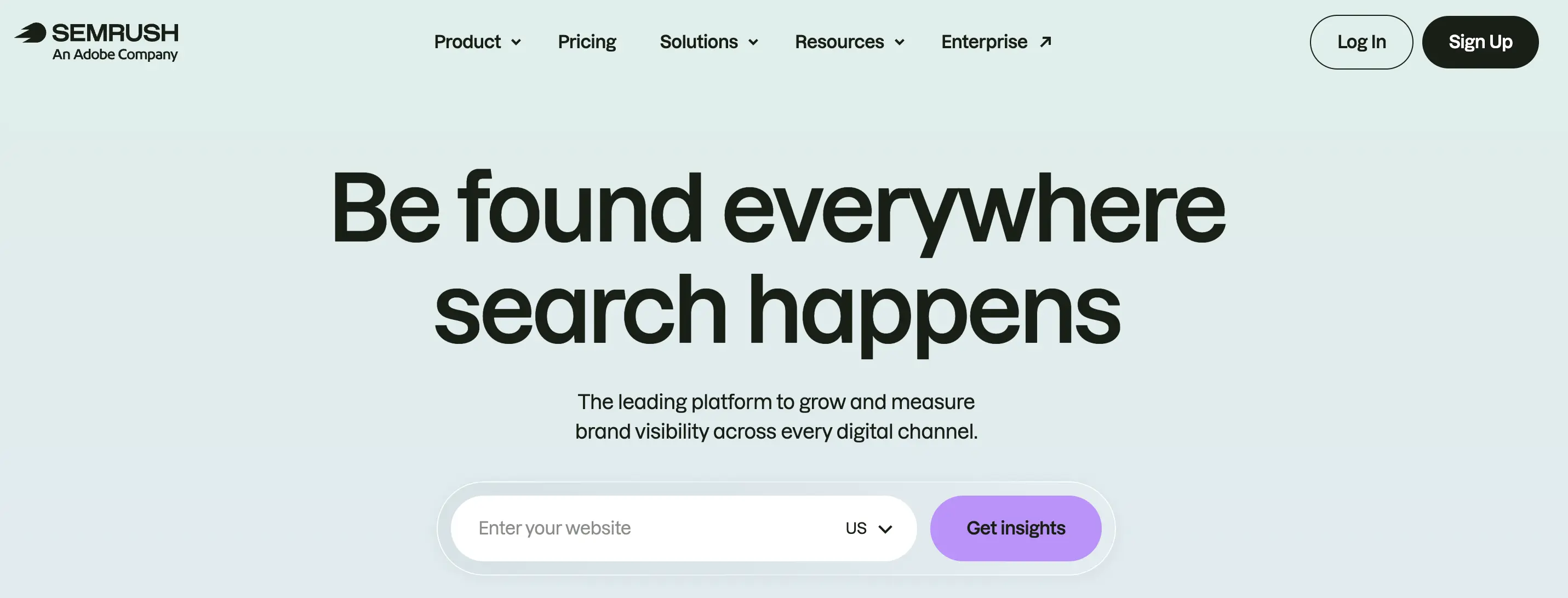
Semrush is the most convenient shortlist candidate for teams that already use its SEO data, reporting, and site-audit environment. It can work well for teams that want AI visibility monitoring inside an existing SEO workflow instead of adopting a separate standalone platform.
Semrush offers custom prompt tracking and citation analysis as an add-on within its main SEO platform. It is a highly practical choice for teams already using Semrush who want to avoid vendor sprawl. While convenient, it acts as a reporting dashboard rather than one of the active AEO tools built for content execution.
Pros:
- Documents custom prompt tracking, citations, sentiment and narrative analysis, competitive prompt gaps, AI bot accessibility, exports, and reporting.
- Lets teams evaluate AI visibility alongside established SEO work.
- May reduce training time and vendor sprawl for teams already using Semrush.
Cons:
- Packaging has been changing, including the positioning of Semrush One.
- AI visibility is priced per domain, so multi-domain teams should price the full portfolio rather than relying on a single-domain headline.
- Teams that need a dedicated AEO execution layer may still need a separate content workflow.
Pricing: Current AI visibility package pricing should be verified before purchase. Buyers should account for per-domain costs, prompt allowances, add-ons, and whether the required AI visibility features sit inside the selected package.
8. Ahrefs Brand Radar: best for broad competitive benchmarking
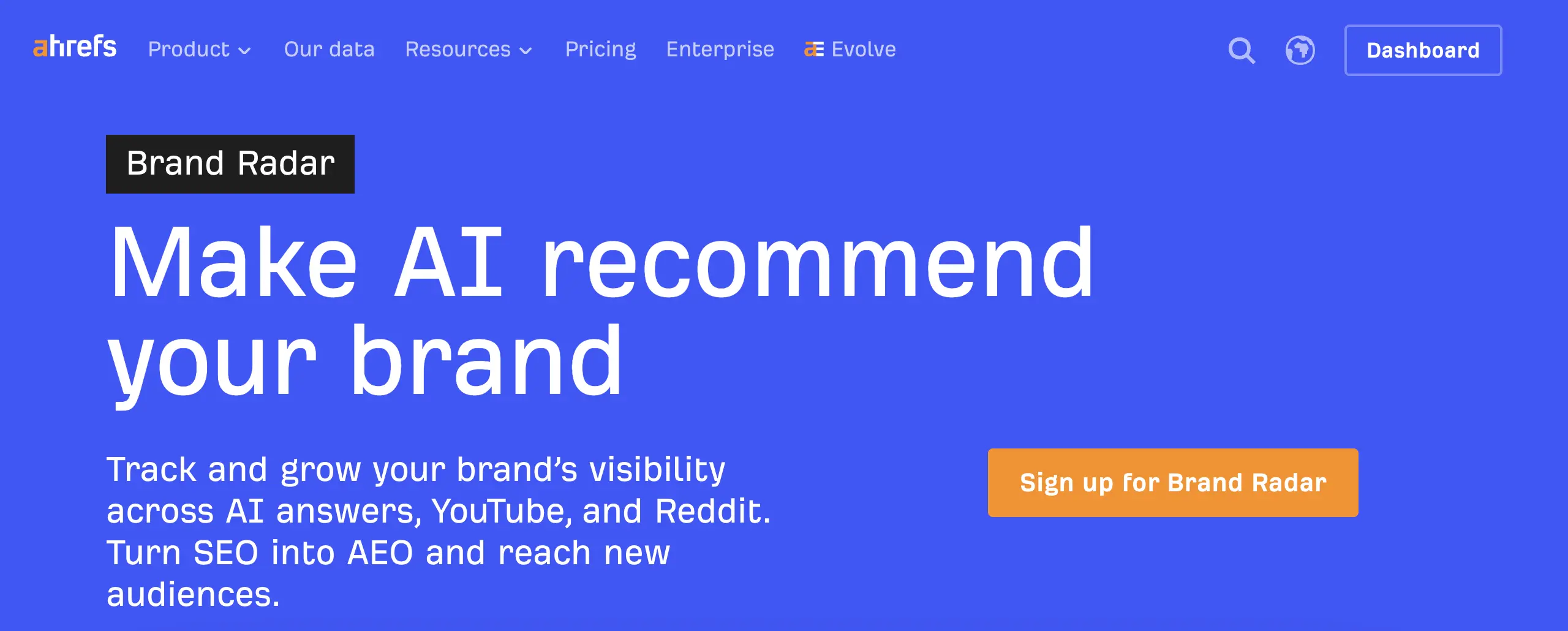
Ahrefs Brand Radar fits teams that value a large searchable answer index and want AI visibility beside web, search, and competitive data. It is a sensible fit for broad competitive benchmarking across discovery surfaces.
Ahrefs Brand Radar builds AI visibility tracking into Ahrefs' larger search index and competitive intelligence suite. It is designed for competitive benchmarking and monitoring market share across multiple discovery channels. Because it relies heavily on modeled opportunity and estimated impressions rather than direct traffic tracking, it is best suited for high-level analyst research.
Pros:
- Documents mentions, citations, custom prompts, share of voice, competitor comparisons, and searchable responses across AI and other discovery surfaces.
- Works well for teams that already use Ahrefs for SEO research.
- Places AI visibility data inside a broader competitive analysis environment.
Cons:
- Estimated impressions and visibility represent modeled opportunity, not measured audience reach or referral traffic.
- Pricing is modular and driven by selected platforms and custom prompt checks.
- Buyers looking only for a small custom prompt tracker may pay for more data than they need.
Pricing: Pricing is modular and depends on selected platforms and custom prompt checks. Current configurations may start above older $199 references, so buyers should verify the selected-platform setup before comparing costs with dedicated prompt trackers.
9. Clearscope: best for content optimization teams
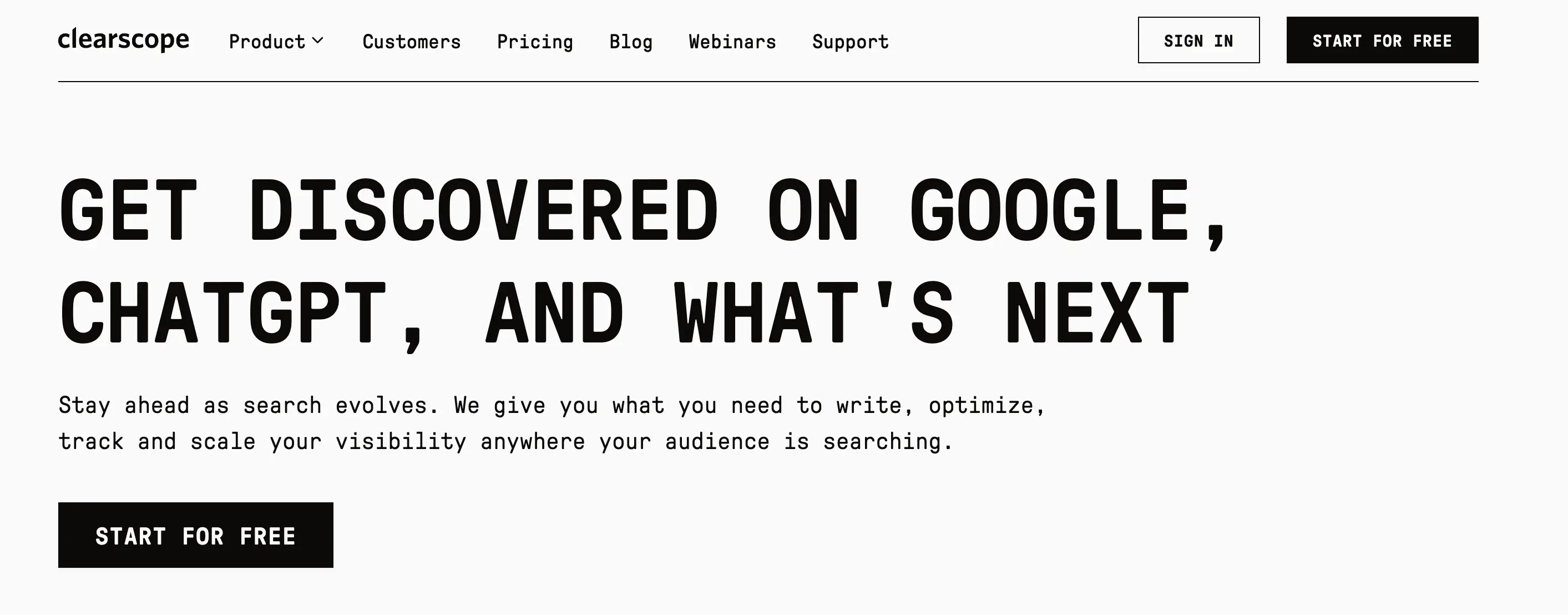
Clearscope is a content workflow platform with AI visibility features, making it useful for teams whose primary job is improving pages rather than monitoring the widest set of engines. Content teams that want visibility signals attached to optimization work should compare it against dedicated AI visibility tracking tools.
Clearscope is primarily a content optimization platform that includes AI visibility and mention tracking. Rather than acting as a standalone, multi-engine prompt monitor, it serves content editors who need to see AI source data directly alongside their writing workspace to improve individual pages.
Pros:
- Tracks AI mentions, citations, responses, topics, pages, and content performance.
- Retains established optimization and internal-linking workflows.
- Helps teams connect AI visibility findings with page improvement, topic coverage, and content quality work.
Cons:
- Monitoring scope is narrower than dedicated multi-engine intelligence platforms.
- Tracked topics should not be assumed to equal unrestricted custom prompt tracking.
- Clearscope is more of an editor with visibility features attached than a full AI visibility tracker, so competitive monitoring may require a second tool.
Pricing: Public plans start at $129 per month, with tracked prompt and page allowances varying by tier. Buyers should check topic, page, and AI visibility limits before treating the headline price as the real operating cost.
10. SE Visible: best for straightforward agency reporting
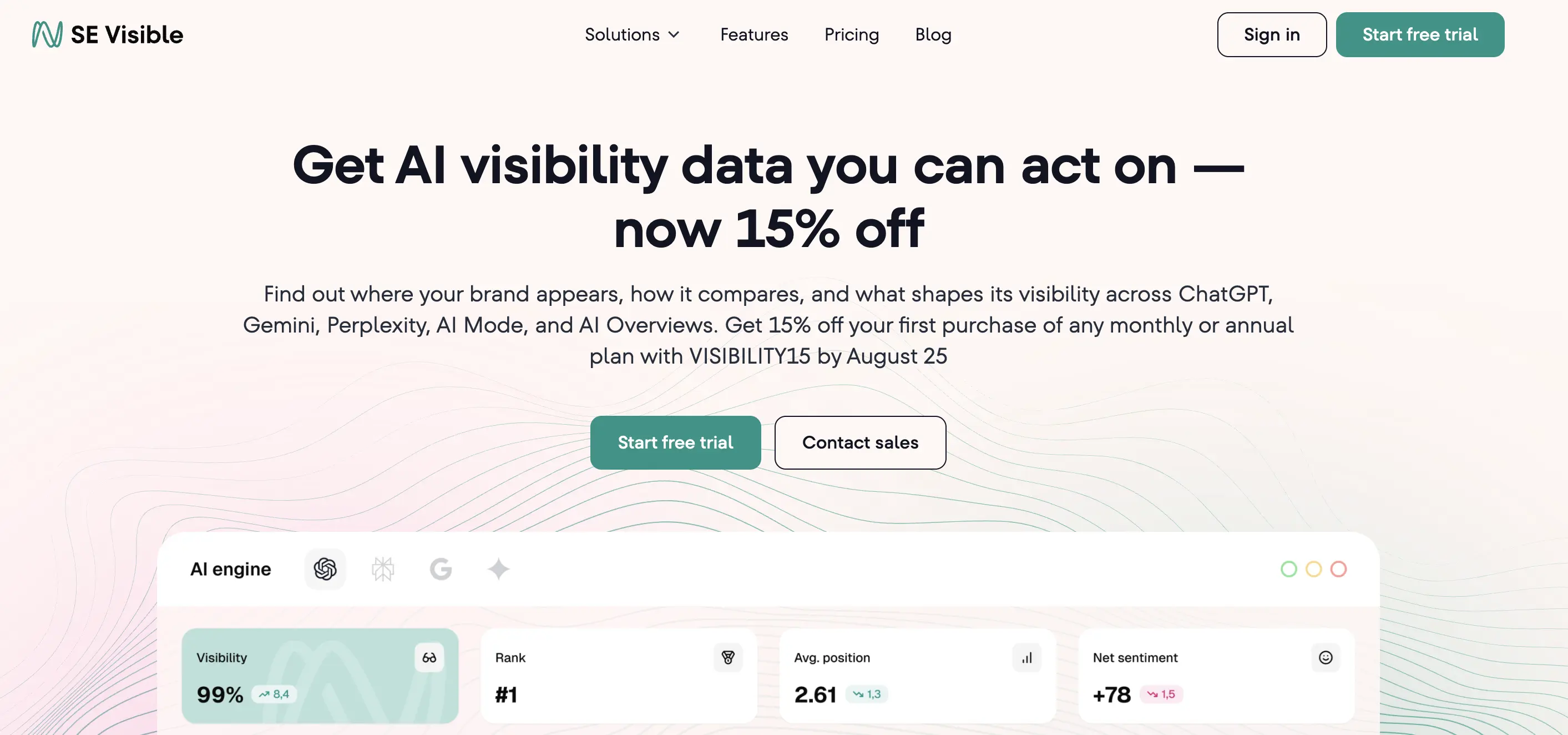
SE Visible offers an accessible reporting layer for agencies and multi-brand teams that need clear trends without an enterprise implementation. It is a practical option for straightforward agency reporting across common AI answer surfaces.
SE Visible is a simple, weekly-refresh reporting tool built for agency dashboards and multi-brand setups. By running each prompt three times to smooth out volatility, it provides consistent trend tracking across major AI engines. It is designed for teams that need straightforward reporting rather than high-frequency data or built-in content execution.
Pros:
- Covers ChatGPT, Gemini, Perplexity, Google AI Mode, and Google AI Overviews.
- Tracks mentions, citations, sentiment, competitors, and position-weighted visibility.
- Runs prompts three times according to its documented methodology, which can help smooth some volatility compared with single-response checks.
Cons:
- Reports refresh weekly rather than daily, so it may not suit teams that need high-frequency monitoring.
- Agencies that need integrated content production, publishing, or deeper enterprise exports should compare it with more execution-focused or analyst-focused platforms.
Pricing: Agency plans start at $99 per month and include a 10-day trial, with higher tiers adding capacity.
How AI visibility tools collect data
Collection method affects what a dashboard can claim. Three approaches dominate, and each trades something away.
API-based dispatches
Querying a model through its API is fast, scalable, and repeatable, which makes it the cheapest way to run a large prompt set on a schedule. The trade-off is fidelity: an API response can differ from what the consumer interface shows, because the public product may apply different system instructions, retrieval behavior, personalization, or interface modules.
Browser-emulated scraping
Premium platforms drive real browser sessions, typically with automation frameworks such as Playwright or Puppeteer, and capture what a user would actually see. This preserves rendered citations, footnotes, side-cards, and geo-aware layouts that an API call never returns. It costs more to run, breaks more often when interfaces change, and is harder to standardize across engines and locations.
Server-layer crawler tracking
Server-log or server-layer tracking measures visits from documented AI crawlers and fetchers, identified by user agent. GPTBot and PerplexityBot are two of the more commonly seen examples. This is the only way to observe whether AI systems can technically reach and retrieve a site, which makes it valuable for diagnosing access and crawlability. It cannot prove that a brand appeared in an answer.
Because method is rarely stated on a pricing page, ask directly:
- Do you use APIs, neutral browser sessions, a stored answer index, or a combination?
- How many times does each prompt run, and how often?
- Which location and language settings apply?
- Are raw responses available to inspect, or only aggregated scores?
- How does the system handle personalized or logged-in answers?
How to choose the right AI visibility tool
Start with the decision the data must support. A small brand checking 15 category prompts needs a different product from an agency managing 40 clients or an enterprise monitoring markets and product lines. The shortlist should be judged against the actual decision it needs to support, not against the longest feature list.
Calculate the usable price, not the starting price. Include the prompts, engines, repeated checks, locations, brands, seats, exports, and refresh cadence required for your workflow. A cheap plan becomes expensive when core engines are add-ons; a higher-priced plan can be economical if it replaces separate reporting and execution tools.
Then inspect the path from finding a gap to fixing it. Monitoring products show where a brand is missing. AI search analytics platforms add source, competitor, market, or referral context. Execution-focused AEO tools connect those findings to briefs, page updates, publishing, and measurement.
The top AEO tools for AI search visibility sort into three rough stacks, and most buyers fit one of them cleanly.
The freelancer and SMB stack
A single brand, one or two markets, and a budget that will not absorb an enterprise contract. Prioritize a low floor and honest engine coverage over dashboards you will not open weekly. Otterly.AI and Zerply's entry tiers both work here. Check which engines are included before comparing headline prices, because add-ons are where cheap plans stop being cheap.
The agency stack
Multiple client brands, recurring reporting, and new-business pitches. You need client workspaces, exports or Looker Studio, seat economics that survive a growing team, and ideally a content pipeline rather than a reporting dead end. Peec AI is built around the pitch-to-client motion; SE Visible keeps reporting simple; Zerply suits agencies that deliver content execution as part of the retainer.
The enterprise stack
Many markets, product lines, and personas, plus governance and analyst-grade exports. Segmentation, large prompt matrices, and raw data access matter more than price. Zerply is the depth option; Similarweb adds market and referral context; Ahrefs Brand Radar supports large-scale competitive benchmarking. Confirm SSO, contracting, and data-export terms early, since those often gate procurement more than features do.
Before buying, run a trial with a fixed prompt set. Include:
- Category prompts, such as "best AI visibility tools"
- Comparison prompts, such as "Zerply vs Profound"
- Alternative prompts, such as "Profound alternatives"
- Integration questions relevant to your stack
- Problem-led queries a buyer would actually type
Check whether the raw answers and cited URLs support the dashboard's summary. Repeat important prompts, because one response is not a trend.
Conclusion
AI visibility tooling is young enough that no product in this list has settled into a final shape, and the scores they produce are not yet a shared currency. What these platforms do reliably is narrower and more useful than a single number: they show which prompts surface a brand, which sources those answers lean on, and where a competitor is being recommended instead. That is enough to prioritize content work, which is the actual point.
The practical next step is to shortlist two or three products and run one fixed, buyer-led prompt set through every trial. Compare the raw answers, not just the dashboards, and price each option at the prompt volume and engine mix you will really use. To evaluate the monitoring-to-execution workflow directly, start a 7-day Zerply trial.
Frequently asked questions
What is the best AI visibility tool?
There is no universal winner, and any roundup claiming one is ranking on its own criteria rather than yours. The right tool is decided by four things: which engines you need covered as standard rather than as add-ons, how many prompts your category actually requires, whether you need the data to trigger content work or only to report on it, and what the plan costs at that real volume. Score the shortlist on those four before comparing feature lists.
How much do AI visibility tools cost?
Entry plans commonly start between $29 and $129 per month, although Zerply offers lower-priced and free options. Mid-market packages can cost several hundred dollars per month, while enterprise plans use custom pricing.
How accurate are AI visibility tools?
They are best used for directional trends, not absolute market truth. AI answers change by model, date, prompt wording, location, personalization, and repeated run. Accuracy improves when a platform exposes raw answers and citations, documents its method, and reruns a stable prompt set consistently.
What is the difference between an AI mention and a citation?
A mention names or discusses the brand. A citation links to or attributes a source. A brand can be mentioned without its website being cited, and a page can be cited without the answer recommending the company. Track both signals separately.
Can these tools tell me how much traffic ChatGPT is sending?
Partially. In GA4 you can build a custom channel group that isolates known AI referrer domains, and platforms with a referral panel, including Similarweb and Zerply, surface AI referral sources directly. The important limit is coverage: a large share of AI-assisted discovery never passes a referrer at all, because the user reads the answer and later arrives through a branded search or a direct visit. Treat AI referral counts as a floor rather than a full measure, and read them alongside mention and citation data rather than instead of it.
How do AI visibility scores get calculated?
Most are weighted indexes rather than direct measurements. Typical inputs are mention rate across the tracked prompt set, citation presence, position or prominence within the answer, and competitor share of voice, each weighted by the vendor's own formula. Because prompt samples, engines, run frequency, and weightings all differ, two platforms can report different scores for the same brand on the same day. Use a score to track movement inside one platform, not to compare platforms.
Do AI visibility tools replace SEO software?
No. They add evidence about AI-generated answers, but teams still need search-demand research, technical SEO, content production, authority building, analytics, and conversion measurement. A combined platform can reduce tool switching, but it does not remove those jobs.
How many prompts should I track?
Most teams can cover one category properly with 15 to 40 prompts, weighted toward category and problem-led questions rather than brand-name queries, which are the easiest to win and the least informative. Multiply that base by persona, market, or product line only when each represents a genuinely distinct buying decision.
Written by
Founder, Zerply.ai & Wittypen
Preetesh Jain is the Founder of Zerply.ai and Wittypen. He specializes in SEO, Answer Engine Optimization (AEO), AI search visibility, content marketing, and product development. Through his work building AI-powered marketing platforms, he helps businesses improve their organic presence across Google, ChatGPT, Perplexity, Claude, and other emerging discovery channels. He regularly writes about AI search, organic growth, content strategy, and the future of digital marketing.