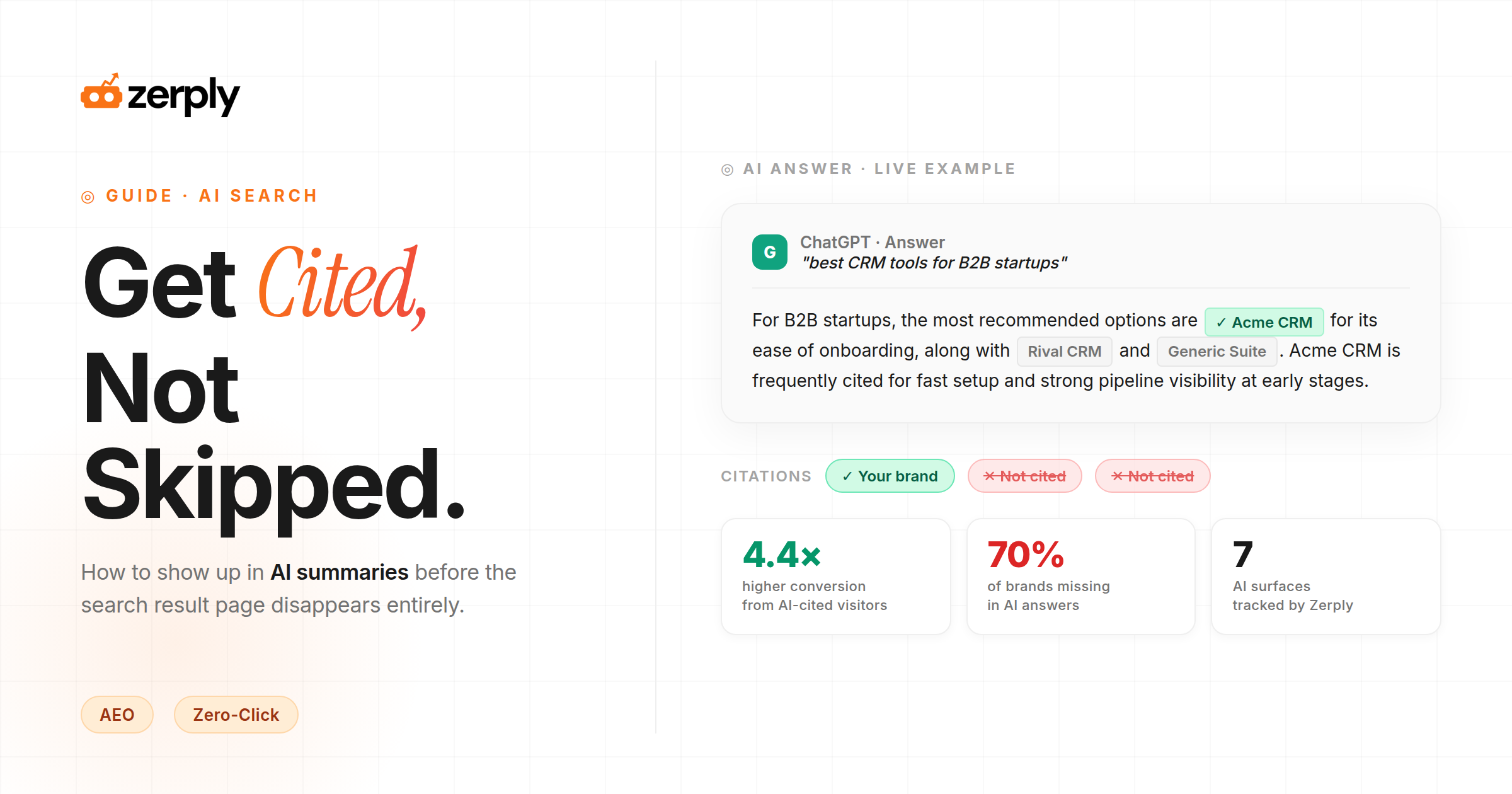
How to Optimise for Zero-Click Searches

Zero-click searches are changing how people discover information. More searches now end on the results page or inside AI chat interfaces, where users get an answer without visiting a website. That shift means I can no longer think about visibility only in terms of rankings and clicks. I need to think about whether my content is clear enough, trustworthy enough, and structured well enough to be quoted inside AI answers.
A 2026 Pew Research Center study found that traditional search links are clicked in only 8% of searches when AI-generated summaries appear, compared with 15% when no summaries are shown. Industry analyses of Google AI Overviews also suggest that the click-through rate on the top organic result can drop from about 27 to 28% to roughly 11% when AI summaries appear.
For me, that makes zero-click searches a content problem as much as an SEO problem. The pages that surface in AI answers tend to say something useful in a way machines can extract quickly and users can trust immediately.
When my content helps answer a query before a click happens, my brand can still gain authority. This guide explains how I approach zero-click searches so content remains visible, useful, and attributable.
How do zero-click searches work
Zero-click searches happen when a search engine or AI interface answers a user’s question directly on the results page. That answer might appear as an AI Overview, a featured snippet, a knowledge panel, or a conversational response inside a chat interface. In each case, the search ends without the user clicking through to a traditional listing.
Zero-click answers differ from older search features because they often pull from multiple sources at once. Instead of quoting one page word for word, AI systems can combine definitions, explanations, and examples from several domains into one response.
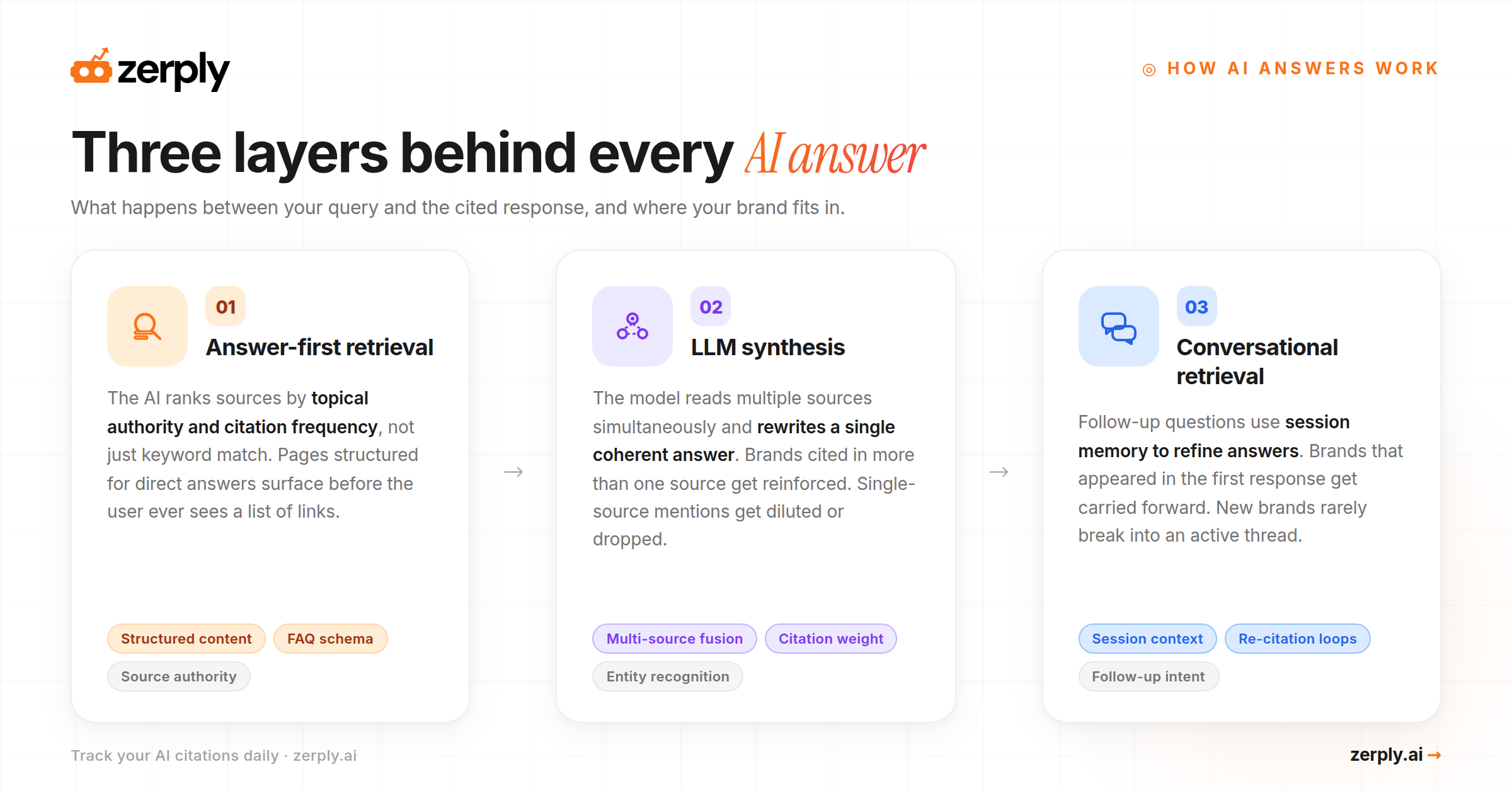
From what I see, these systems usually rely on a few connected steps. They first identify the query intent and decide whether a direct answer would satisfy it. They then retrieve passages that contain clear, self-contained statements. After that, a language model rewrites or synthesizes those passages into a concise answer, sometimes citing sources and sometimes only implying them through links or domain references.
That process changes what I optimise for. A page still needs authority and relevance, yet it also needs extractable language. Clear definitions, short answer blocks, consistent terminology, and visible sourcing all make it easier for AI systems to reuse the content accurately.
👉 Also read Competitor AI Visibility: Why They Show Up and You Don’t
Why zero-click searches matter for SEO
Zero-click searches matter because they reshape how buyers form impressions. A user may see my insight, my data point, or my explanation inside an AI answer before they ever evaluate a list of blue links. That early exposure can influence trust, recall, and later conversion behavior even when traffic declines.
I also have to measure success differently. Click-through rate still matters for many pages, though it no longer tells the full story for informational queries. When a search engine answers the question directly, I want to know whether my domain was cited, whether my brand was associated with the topic, and whether branded demand increased after that exposure.
For SMBs and IT teams, this shift affects planning as much as reporting. Educational pages that once existed mainly to capture top-of-funnel traffic now serve another role. They help establish authority inside AI summaries and search features that users may treat as final answers.
How to write for zero-click searches
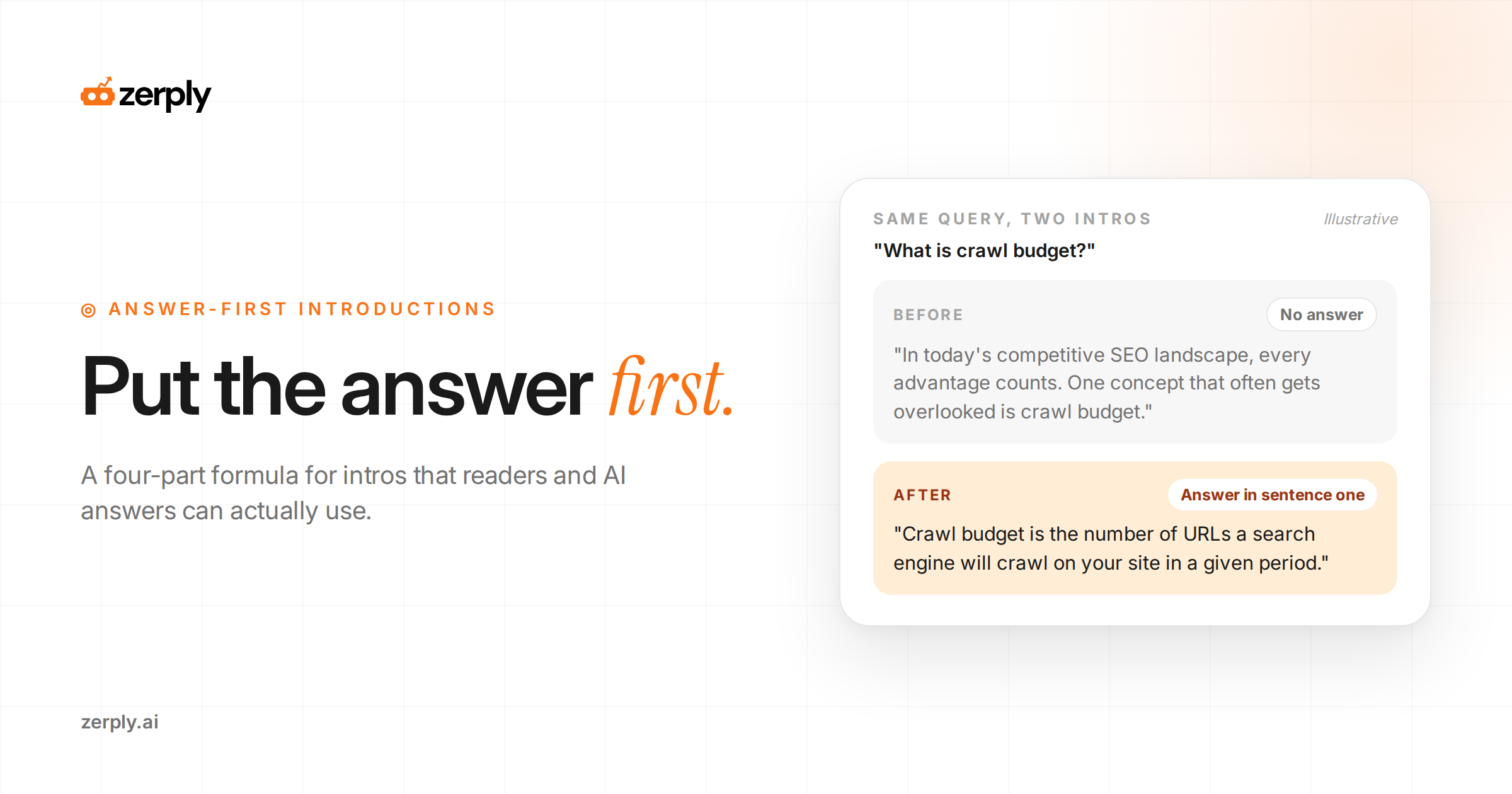
When I optimise for zero-click searches, I start by writing the answer early. I want the first lines on the page to make sense on their own, even when they are lifted out of context. That means I avoid promotional language and lead with a direct explanation of the topic. A sentence such as “Zero-click searches are searches where the user gets the answer without visiting a website” gives both a human reader and an AI system something clean to work with.
I also shape subtopics around real questions and plain-language answers. A heading should tell the reader exactly what the section covers, and the paragraph beneath it should resolve that question quickly. Once that core answer is in place, I can expand with examples, context, data, and use cases for readers who want more depth.
This way of writing helps on two levels. Search engines and AI tools can extract the concise answer, while human visitors who do click through still find enough substance to keep reading. That balance matters because zero-click searches reward clarity, yet the page still needs depth and credibility to earn citations in the first place.
A recent TechCrunch report noted that zero-click outcomes rose from 56% to roughly 69% between May 2024 and May 2025, a pattern that aligns with the wider rollout of AI-generated answer experiences. That trend reinforces why I write with extractability in mind.
What content ranks in zero-click searches
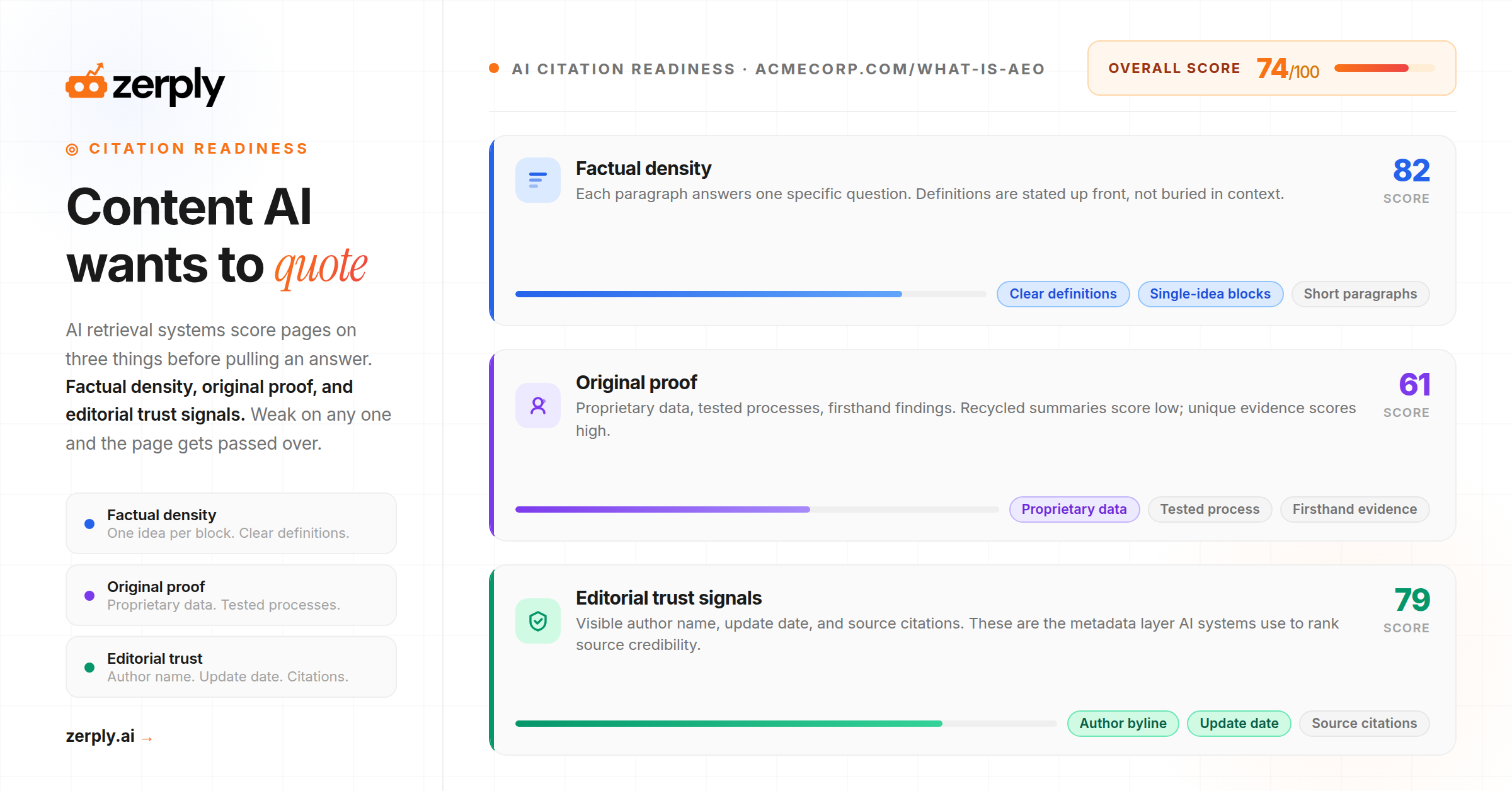
AI systems tend to prefer content that is factual, concise, and easy to interpret. I have a better chance of being cited when I define terms clearly, attribute claims to reputable sources, and keep each paragraph focused on one idea. Short blocks of explanatory copy often work better than sprawling intros that bury the answer.
Original research and firsthand experience also help. When I publish proprietary data, document a process I have tested, or explain a technical issue with clear evidence, I create material that stands out from recycled summaries. Search systems want dependable source material, and readers benefit from content that says something specific instead of repeating generic advice.
Editorial provenance matters too. I make sure author names, update dates, and source citations are visible. Those details support trust for readers, and they also provide useful signals for systems trying to decide which sources deserve inclusion.
Technical setup for zero-click searches
Strong writing alone will not carry a page into zero-click searches when the technical setup is weak. I need search engines to crawl the page easily, understand what the page covers, and connect my brand with the information being quoted.
Structured data helps with that. Schema markup such as FAQ, Article, Product, QAPage, or Dataset can clarify what a page contains and where the core answer sits. I treat the answer field inside schema as carefully as the visible copy, since both can influence how content is interpreted.
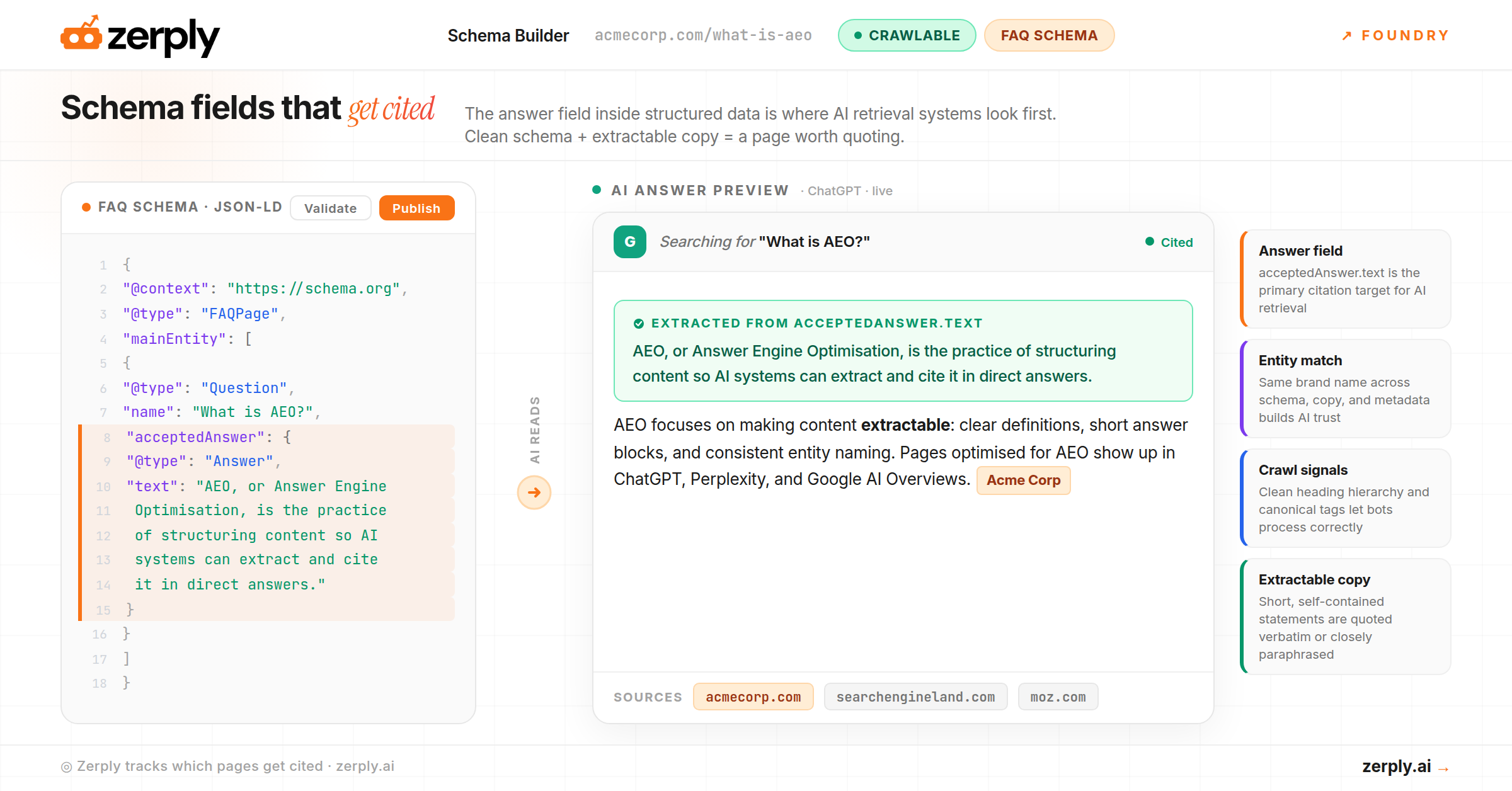
Consistency also matters. I use the same product names, executive titles, and branded entities across page copy, metadata, and structured data. When those references drift, AI systems have a harder time associating the content with the right brand or topic.
Site structure plays a quiet but important role. Clean heading hierarchy, short paragraphs, descriptive internal links, valid canonicals, XML sitemaps, and a crawlable robots.txt file all make it easier for retrieval systems to process the site correctly. I have found that formatting choices often shape extractability as much as the words themselves.
How to optimise for zero-click searches
The simplest place to start is with existing pages that already rank or attract impressions. I revise the opening paragraph so it answers the main query immediately, then I tighten subheads and body copy so each section can stand alone. This often makes a page more useful for readers and easier for AI systems to quote.
I also publish concise data summaries when I have something worth citing. A short page that states a clear finding, links to the source, and explains the takeaway can become a strong candidate for inclusion in zero-click searches. These pages work especially well when they answer a recurring industry question in direct language.
Author pages deserve attention too. When expertise is visible and linked to the content, trust signals become stronger. I want each article to show who wrote it, why they are qualified to write it, and when the information was reviewed or updated.
Language choice has a direct effect on selection. Overwritten copy filled with sales phrases tends to be harder for AI systems to lift cleanly. I aim for neutral wording, precise claims, and supporting evidence that can survive paraphrasing without losing meaning.
How to measure ROI from zero-click searches
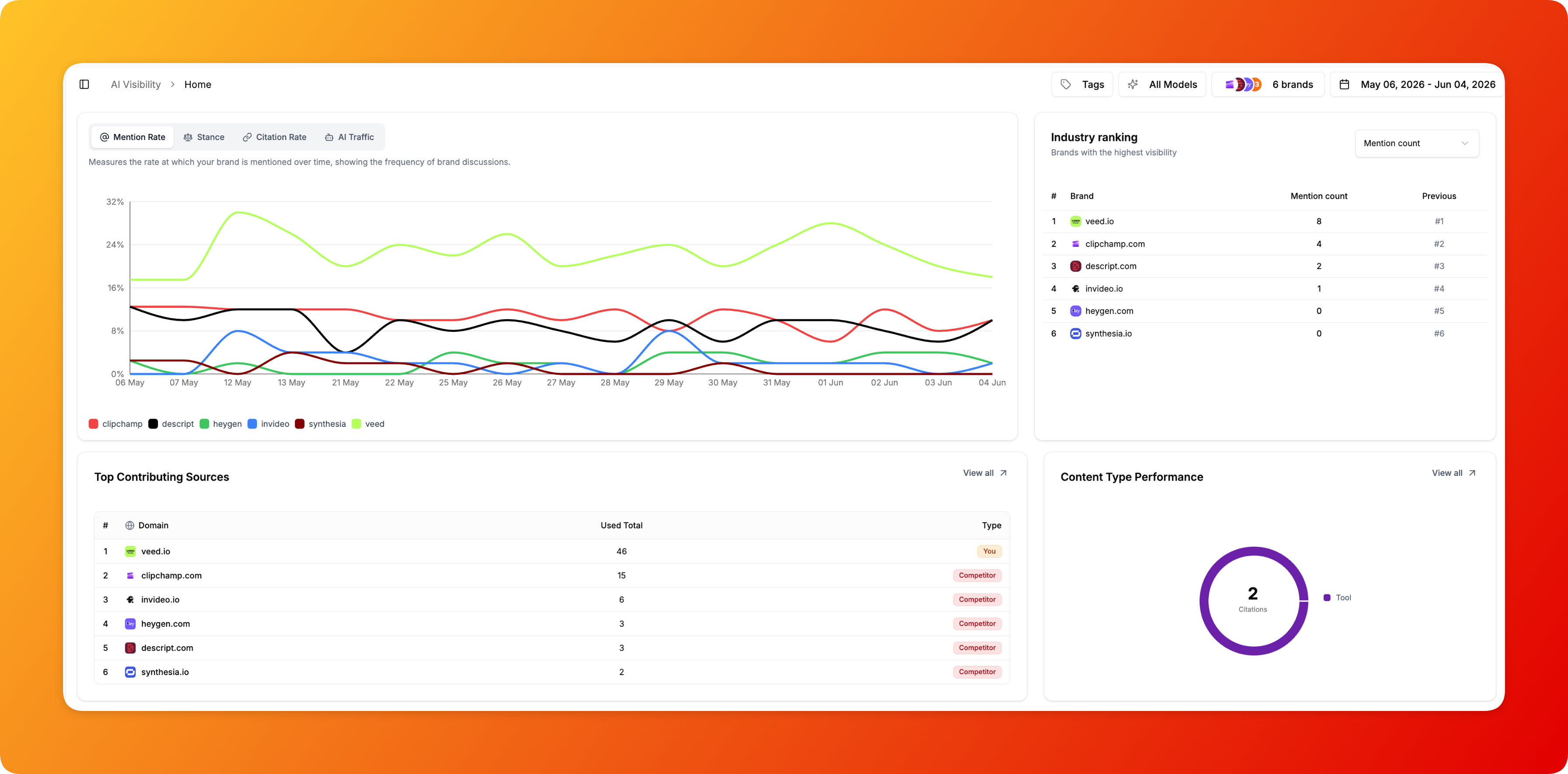
Clicks no longer tell the whole story for zero-click searches, so I track a broader set of outcomes. I want to know how often my brand appears in AI summaries, how often my domain is cited as a source, and whether branded search interest grows after visibility inside those answers.
I also look for conversion signals that do not map neatly to a single referrer. Someone may see my brand in an AI Overview, return later through a branded search, and convert during a direct visit. That journey can look disconnected in analytics unless I watch trends over time and compare exposure windows against lead activity.
| Area | What I focus on | Key ROI signal |
|---|---|---|
| Content & structure | Clear definitions, answer-first writing, schema | Inclusion in AI summaries/snippets |
| Technical setup | Crawlability, structured data, consistent entities | More pages cited in AI answers |
| Brand & authority | Author profiles, original data, visible sourcing | Stronger brand association with topics |
| Measurement of zero-clicks | Tracking AI mentions, branded search, assisted leads | Lead growth during high-visibility periods |
Monitoring AI outputs directly helps here. I review how different platforms quote or paraphrase my content, which topics they associate with my brand, and where competitors appear instead of me. That gives me a clearer view of whether my content is merely indexed or actually being used.
A workflow that gets value
My workflow for zero-click searches is usually iterative. I begin with pages that already cover high-intent topics, then rewrite the top section to deliver a direct answer. After that, I strengthen structure, add or refine schema, standardise entity references, and confirm that the page is easy to crawl. Once those basics are in place, I watch whether inclusion improves inside AI-generated results.
This work benefits from steady monitoring because search features and AI summaries change often. A page that is cited today may disappear from summaries later if fresher, clearer, or more authoritative content enters the space. Keeping key pages current helps preserve relevance and trust.
For teams that want better visibility into this process, Zerply.ai is worth a look. It focuses on Agentic SEO and AI Visibility Tracking, which can help surface where your brand appears across AI platforms, how your content is being reused, and which pages have the strongest potential to earn citations. I see that kind of tooling as useful for diagnosis and prioritisation, especially when it is hard to measure zero-click visibility with standard analytics alone.
How to get value from zero-click searches
Zero-click searches reward content that answers real questions with clarity and supporting evidence. They also reward sites that make those answers easy to crawl, parse, and attribute. When I align content, technical structure, and measurement, I give my pages a stronger chance of being quoted where users are already looking for answers.
That does not mean every page should be reduced to short snippets. Depth still matters. Original insight still matters. What changes is the packaging. I make the key answer visible early, support it with trustworthy detail, and keep the page structured in a way both people and AI systems can use.
At Zerply, the focus is on helping teams understand and improve how they show up in AI search experiences. Used thoughtfully, that kind of visibility data can support smarter editorial decisions and clearer reporting as zero-click searches continue to shape discovery.
Sign up to explore how your content appears across leading AI platforms and where you can improve citation visibility.
FAQs
Do zero-click searches reduce traffic
They can reduce clicks for informational queries because the answer appears before a site visit. Even so, visibility in zero-click searches can still improve brand recall and influence later visits from users who need deeper information.
How often should I update pages
I revisit important pages every three to six months, or sooner when the topic changes quickly. Fresh facts, clearer formatting, and updated sources all support stronger performance in zero-click searches.
Can small sites appear in AI answers
Yes, smaller sites can appear when their content is clearer, more trustworthy, and easier to extract than content from larger competitors. Strong structure and direct answers can outweigh size in many cases.
What content gets ignored
Content is less likely to appear when it is overly promotional, poorly structured, unsupported by evidence, or difficult to parse. AI systems tend to prefer pages that explain a topic plainly and back up claims with reliable sourcing.
Written by
Founder, Zerply.ai & Wittypen
Preetesh Jain is the Founder of Zerply.ai and Wittypen. He specializes in SEO, Answer Engine Optimization (AEO), AI search visibility, content marketing, and product development. Through his work building AI-powered marketing platforms, he helps businesses improve their organic presence across Google, ChatGPT, Perplexity, Claude, and other emerging discovery channels. He regularly writes about AI search, organic growth, content strategy, and the future of digital marketing.