20 Prompt Categories Brands Must Track for Growth

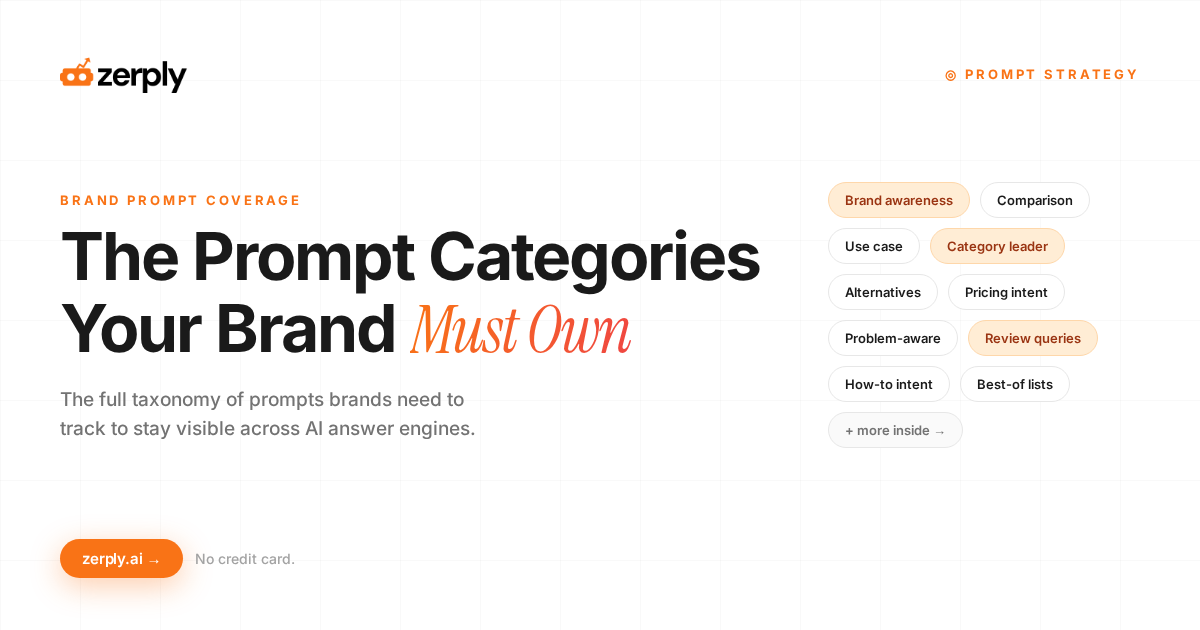
Prompt categories are structured classifications of natural-language buyer queries that map each prompt to a specific funnel stage and intent type. By organising prompts into clear categories, teams can detect intent earlier, align messaging, and route high-value signals to sales or support in real time.
What if your buyers were already telling you exactly what they need, and all you had to do was listen to their prompts?
Every day, people reveal their intent through the questions they type into search, chat, voice assistants, and in-product AI. And even as AI answers become the norm, nearly half of users still click traditional blue links afterwards, which means their prompts remain one of the clearest windows into what buyers truly want.
A single prompt can show you where someone sits in the funnel, what they are unsure about, and what might be blocking their path to purchase. When engineering, marketing, and support teams look at these signals together, patterns start to emerge.
Read on as we explore the twenty prompt categories that help you turn these everyday questions into actionable insight across the funnel.
Why Structured Prompt Categories Become a Growth Engine for Your Brand
When it comes to scaling authority, improving conversions, and tightening your go-to-market motions, nothing beats having a clear, shared language for interpreting buyer questions.

Research shows that organisations using AI-powered lead tracking often generate up to 50% more qualified leads while reducing acquisition costs. This is a direct result of understanding intent earlier and acting on it faster.
Here’s why structured prompt categories become a true growth engine for your brand:
- Quicker Identification of Intent: Clear categories help teams spot buyer needs earlier, shortening the path from question to conversion.
- Improved Alignment Across Teams: Marketing, product, engineering, and support all work from the same signal map, reducing guesswork and rework.
- Better Choices for Content and Products: You see exactly which prompts spike, stall, or repeat, guiding what to build, fix, or publish next.
- Superior Lead Routing: High-intent prompts get flagged instantly, sending ready buyers to sales while filtering out noise.
- Ongoing Funnel Optimisation: Prompt transitions reveal where users get stuck, helping you refine journeys and improve conversion rates over time.
When it comes to orchestrating a predictable, high-intent funnel, ToFu/MoFu/BoFu prompts give you the clearest signal map for guiding users from curiosity to conversion.
👉 Also Read : 12 Prompt-Tracking Workflows Every Agency Needs for AI SEO Success
20 Prompt Categories That Power Smarter Growth
A well-structured taxonomy makes prompt analytics actionable. Below, we discuss the twenty prompt categories that help you decode intent and drive smarter decisions across the funnel:
1. Problem Definition
Early-stage users are still diagnosing their pain points. They are not shopping yet; they are trying to understand the problem itself. This is your chance to shape how they frame their challenge.
- What It Really Signals: Curiosity, early awareness, and the start of a problem-recognition journey.
- Funnel: TOFU
- Examples: “What causes X in [industry]?”, “Why do teams struggle with Y?”
- Tracking: Query volume, new-visitor share, referral source mix.
- IT Action: Tag as tofu prompts, link canonical explainers, suggest them during onboarding.
2. Educational How-to
These users want clarity and competence. Before evaluating tools, they need to understand the basics. Meeting them here builds trust and positions you as their starting point.
- What It Really Signals: A learning mindset and openness to expert guidance.
- Funnel: TOFU
- Examples: “How to get started with Z”, “Beginner’s guide to X”
- Tracking: Dwell time, content shares, newsletter sign-ups.
- IT action: Mark as tofu prompts, add structured data, surface in-product tutorials.
3. Feature Comparison
Prospects are actively evaluating. They want specifics, differences, and trade-offs. If they’re asking these questions, you’re already on their shortlist.
- What It Really Signals: Mid-funnel intent and solution qualification
- Funnel: MOFU
- Examples: “Compare A vs B for [use case]”
- Tracking: Comparison-page CTR, checklist downloads, click-to-demo events
- IT Action: Publish canonical comparison pages, tag as mofu prompts, enrich with schema
4. Use-case Fit
🔎** Did you know?**Tracking buyer intent signals like repeated product-page visits or content downloads can reveal which leads are actively evaluating solutions rather than casually browsing.
Users know the problem and are now validating whether your solution fits their context. They are seeking reassurance that your product will work in their environment.
- What It Really Signals: Feasibility concerns and a narrowing of the evaluation.
- Funnel: MOFU
- Examples: “Best way to do X with limited Y?”
- Tracking: Case-study clicks, demo requests post-engagement.
- IT Action: Serve decision-tree chat flows; route mofu prompts to solution engineers.
5. Cost & Licensing
These queries appear when buyers are close to a decision. They want exact numbers. A pricing question is rarely casual; it’s a strong purchase indicator.
- What It Really Signals: High-intent qualification and readiness to buy.
- Funnel: BOFU
- Examples: “Cost for enterprise plan with X seats?”
- Tracking: Pricing-page visits, pricing-chat interactions.
- IT Action: Flag as bofu prompts and auto-route to quoting workflows; instrument pricing events.
6. Total Cost of Ownership (TCO)
Buyers are comparing not just price but long-term value. Finance or procurement may be involved. This is where ROI narratives become critical.
- What It Really Signals: Budget justification and multi-year planning.
- Funnel: MOFU
- Examples: “TCO of switching from A to B?”
- Tracking: Calculator use, follow-up contact forms.
- IT Action: Embed calculators with event tracking; tag as mofu prompts for sales enablement.
7. Integration & Ecosystem
Buyers want assurance that your solution plays nicely with their stack. Integration questions often determine whether you make the shortlist.
- What It Really Signals: Technical viability and ecosystem alignment.
- Funnel: MOFU
- Examples: “Does X integrate with Y?”, “Alternatives to X that integrate with Z?”
- Tracking: API-doc hits, integration-guide downloads.
- IT Action: Ensure docs are searchable; record as mofu prompts for product alignment.
8. Replacement & Migration
These prompts come from users actively planning a switch from an existing tool. They have already mentally committed to leaving their current vendor.
- What It Really Signals: Ready-to-move buyers seeking a frictionless transition.
- Funnel: BOFU
- Examples: “How to migrate from Product A to Product B?”
- Tracking: Migration checklist downloads, migration-demo signups.
- IT Action: Build playbooks with instrumentation; tag as bofu prompts and notify onboarding.
9. Security & Compliance
Security teams or enterprise buyers are validating deal blockers. These prompts typically appear right before procurement approval.
- What It Really Signals: Trust validation and risk assessment.
- Funnel: BOFU
- Examples: “Is X SOC 2 compliant?”, “How is data encrypted?”
- Tracking: Trust-centre visits, security-whitepaper downloads.
- IT Action: Maintain an always-current trust centre; auto-send bofu prompts to security pages.
👉 Also Read: 10 Metrics That Reveal When Your Content Is Invisible to LLMs
10. Testimonials & Case Studies
Prospects want proof. Real results from organisations like theirs. This is often the final step before shortlisting or booking a demo.
- What It Really Signals: Social-proof seeking and solution verification.
- Funnel: MOFU
- Examples: “Case study for [industry] using X”
- Tracking: case-study CTR, contact-us clicks post-view.
- IT Action: Tag stories by persona; deliver mofu prompts to sales sequences.
11. Error & Integration Issues
Users are facing operational roadblocks and need immediate help. These issues can heavily influence customer satisfaction and renewal.
- What It Really Signals: Friction, urgency, or early churn risk.
- Funnel: BOFU
- Examples: “Why does integration X throw error Y?”
- Tracking: support-ticket spikes, KB page hits, chatbot fallbacks.
- IT action: sync KB tags with monitoring; escalate high-severity bofu prompts.
12. Performance & Scaling
Advanced users want to optimise or validate scalability. These questions usually come from larger accounts or technical teams.
- What It Really Signals: Production-grade adoption and growth-stage needs.
- Funnel: BOFU
- Examples: “How to reduce latency for X at scale?”
- Tracking: Doc engagement by high-value accounts, support escalations.
- IT action: publish performance playbooks linked to observability dashboards; tag bofu prompts.
13. Industry Trends & Benchmarks
📈 👀 Good to Note:Repeated visits to key pages, like pricing or product features, are some of the strongest signs that a buyer is seriously evaluating your solution.
Early-stage researchers look for context, market shifts, or high-level insight. Content here helps you shape category perception and thought leadership.
- What It Really Signals: Pre-evaluation curiosity and industry scanning.
- Funnel: TOFU
- Examples: “Trends in [industry] 2025”
- Tracking: Report downloads, newsletter sign-ups.
- IT Action: Map research assets to these tofu prompts for demand generation.
14. Implementation Patterns & Best Practices
Buyers want expert-level guidance before committing to complex workflows. This signals technical maturity and deeper evaluation.
- What It Really Signals: Desire for validated approaches and reduced risk.
- Funnel: MOFU
- Examples: “Best practice for CI/CD with X”
- Tracking: Guide engagement, code-sample forks.
- IT action: Offer SDKs and sample repos; label as mofu prompts for adoption teams.
15. Live Demo & Trial Requests

This is as high-intent as it gets. Buyers want hands-on validation now. Every delay here costs conversions.
- What It Really Signals: Purchase readiness and final-stage evaluation.
- Funnel: BOFU
- Examples: “Schedule a demo”, “Enable trial for 50 users”
- Tracking: Demo bookings, trial-to-paid conversions.
- IT Action: Automate intake, apply SLA routing; mark as bofu prompts.
16. ROI & Case-specific Validation
Buyers need clear evidence that your solution will pay off for their use case. These prompts often influence CFO approval.
- What It Really Signals: Financial justification and value verification.
- Funnel: MOFU
- Examples: “Will X reduce costs by Y for use case Z?”
- Tracking: ROI-tool interactions, follow-up sales requests.
- IT Action: Connect calculators to CRM; treat as mofu prompts for enablement.
17. Persona Discovery & Role-specific Queries
Different roles view your product differently. These prompts reveal who is asking. This improves personalisation and targeting.
- What It Really Signals: Persona identification and segmented intent.
- Funnel: TOFU
- Examples: “What should a CTO know about X?”
- Tracking: Persona tokens in prompt text, segment analytics.
- IT Action: Tag content by persona; personalise chat flows; mark as tofu prompts.
18. Proof-of-Concept & Sandbox Questions
Buyers want to experiment before fully committing. This is often a precursor to a paid trial or enterprise deal.
- What It Really Signals: Hands-on evaluation and technical buy-in.
- Funnel: MOFU
- Examples: “Can I run a POC for 30 days with Y?”
- Tracking: POC requests, sandbox sign-ups.
- IT Action: Instrument onboarding steps; flag as mofu prompts for POC owners.
💡 Pro Tip:Offer a guided POC checklist or pre-built sandbox template.
Here ’s how it helps:
- 🚀 Speeds up technical validation so buyers reach an “aha” moment faster
- 🔧 Reduces setup friction by giving teams a clear, ready-to-follow path
- 🎯 Increases conversion likelihood by proving value in a controlled, low-risk environment
19. SLA & Support Commitment
Procurement or IT teams are assessing reliability and the depth of partnership. These prompts often surface right before contract negotiations.
- What It Really Signals: Risk mitigation and enterprise readiness.
- Funnel: BOFU
- Examples: “What is your uptime SLA and response time?”
- Tracking: SLA-page visits, RFP contacts.
- IT Action: Surface legal/ops docs; tag as bofu prompts and alert account teams.
20. Self-service Knowledge Base Queries
Users are trying to solve issues themselves before escalating. A strong KB experience here becomes a retention advantage.
- What It Really Signals: Troubleshooting intent and product friction patterns.
- Funnel: TOFU / MOFU
- Examples: “How do I reset X?”, “Steps to enable Y”
- Tracking: KB resolution rate, fallback-to-ticket ratio.
- IT Action: Link chatbot fallbacks to KB improvement tasks; classify tofu or mofu prompts by complexity.
Make Intent Intelligence Part of Your Operating System
Buyers may not always tell you directly what they want, but their prompts always do. When you organise those signals into clear, structured categories, intent stops being a mystery and becomes an operational asset.
Suddenly, every team has the same visibility into what buyers are thinking, what they are struggling with, and what they need next.
With a shared taxonomy, you’ll no longer be guessing which content to produce, which features to prioritise, or which leads to route to sales. Instead, you’ll finally make decisions anchored in real buyer behaviour, the most reliable data you can get.
At Zerply, we help you turn these raw signals into a fully operational prompt intelligence system, complete with taxonomy design, tagging workflows, routing rules, and dashboards that show exactly how intent moves across your funnel.
If you are ready to decode what your buyers are telling you in their own words,get started now !
FAQs
How often should a prompt taxonomy be updated?
Every 3–6 months is ideal, allowing you to capture emerging behaviours without destabilising historical data or breaking your dashboards.
Can prompt intelligence work without large volumes of traffic or prompts?
Yes! Even small datasets reveal high-intent patterns quickly, especially in categories such as pricing, migration, and troubleshooting.
How do prompt categories help teams avoid over-personalising or over-automating?
They give structure to interpretation, ensuring responses stay consistent and high quality rather than reactive or arbitrary.
Written by
Founder, Zerply.ai & Wittypen
Preetesh Jain is the Founder of Zerply.ai and Wittypen. He specializes in SEO, Answer Engine Optimization (AEO), AI search visibility, content marketing, and product development. Through his work building AI-powered marketing platforms, he helps businesses improve their organic presence across Google, ChatGPT, Perplexity, Claude, and other emerging discovery channels. He regularly writes about AI search, organic growth, content strategy, and the future of digital marketing.