11 Ways to Use Citation Patterns in AI Answers to Boost Your Domain Authority

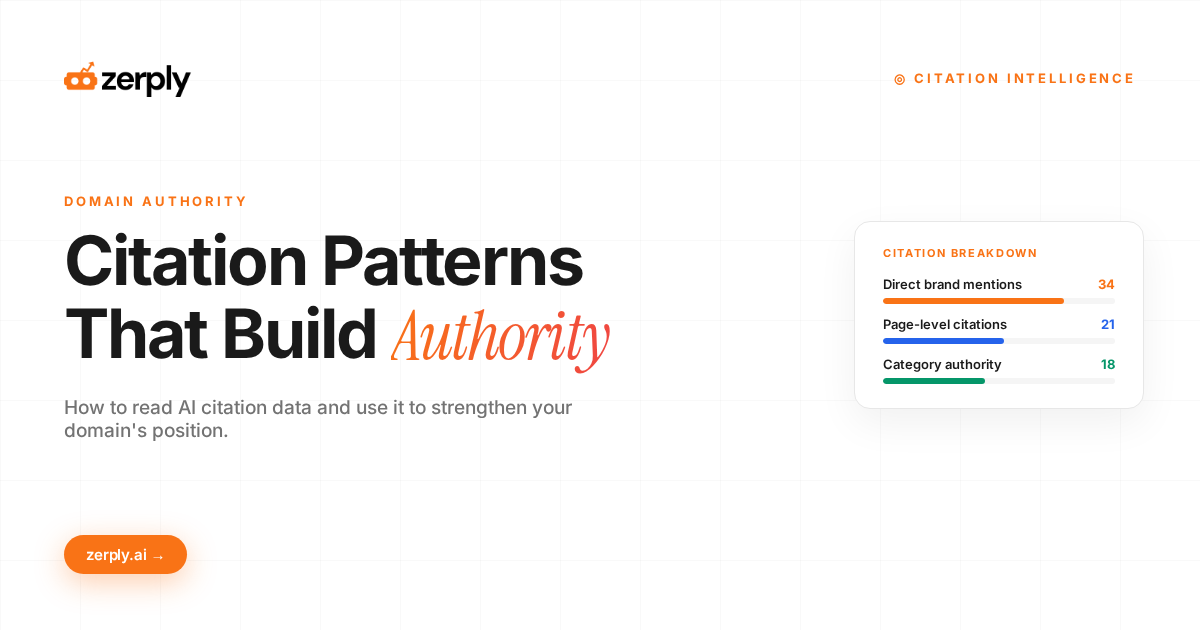
Citation patterns are the recurring ways AI models identify, extract, and attribute information from web sources, based on structure, clarity, and provenance signals. As LLMs increasingly shape how users discover information, understanding these patterns becomes essential for building durable authority. By optimising content architecture, metadata, and original research, any organisation can increase its likelihood of being cited in AI-generated answers.
If you’ve ever wondered why certain brands keep showing up in AI-generated answers, it’s not luck; it’s citation patterns. These are the subtle ways LLMs repeatedly pull, label, and attribute sources across the web.
According to a recent analysis from Profound, nearly 7.8% of all citations made by ChatGPT come from just one domain: Wikipedia. This highlights how heavily LLMs lean on consistent, well-structured sources and how valuable it is to position your own content as a repeatable citation target.
The good news? You don’t need heavy engineering or a giant SEO team to influence this. The tactics below are simple, low-risk moves any small or mid-sized team can roll out quickly to start earning those recurring citations.
Why Citations Matter for Authority and Trust

Wondering why citations carry so much weight? Here are the main reasons:
- Builds Credibility : Citations show that your information is backed by trusted, verifiable sources, making your content more reliable.
- Improves AI Recognition : Clear attribution helps AI models understand provenance, increasing your chances of being referenced in generated answers.
- Boosts Domain Authority : Consistent citations from users, publishers, and AI systems reinforce your brand’s authority across the web.
- Enhances Content Clarity : Well-cited pages naturally become more structured, readable, and easier for machines to parse and reuse.
- Increases SEO and Visibility : Strong citation patterns support link earning, bolster E-E-A-T signals, and improve your likelihood of appearing in AI-driven search results.
***👉 Also Read:** Why Brand Monitoring on AI Platforms is the New SEO*
Tactical Playbook: 11 Ways to Influence AI Citation Patterns
LLMs favour predictable, well-attributed information. In fact, studies show that over 60% of model-cited sources come from domains with consistent structuring, clear metadata, and stable internal linking.
Apply the following methods, one per week or sprint, and track how often your pages show up in AI answers:
Group 1: Content Signals (1-3)
1. Build focused content hubs with clear answerables
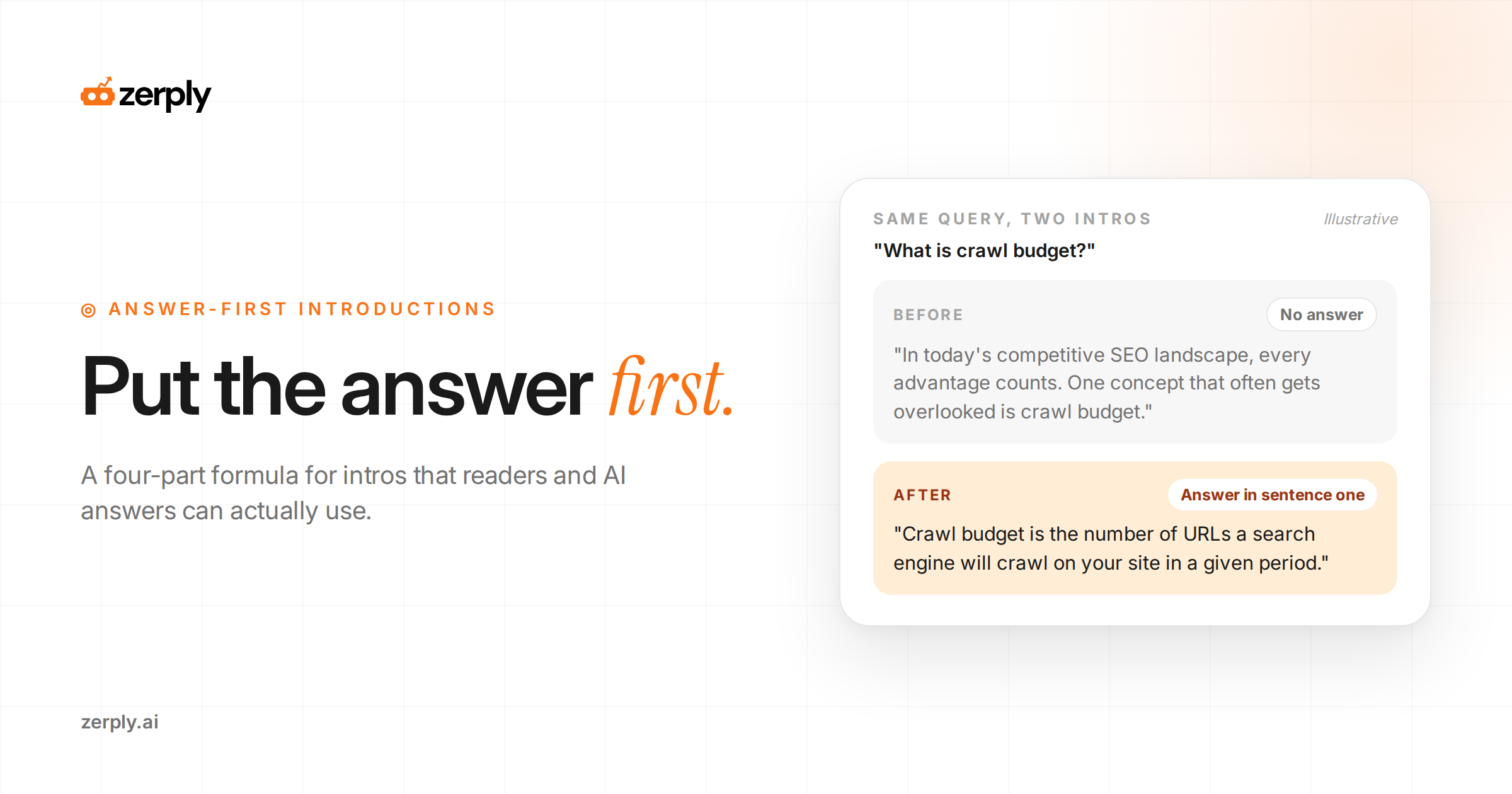
Create a pillar page and tightly themed cluster articles that resolve high-intent questions. Start each page with a 50–75-word lead answer, then expand below. Coherent topical hubs signal deep expertise, so AI engines trust them as repeatable sources.
- Measure : Log the number of times the pillar URL appears in AI answers and monitor ranking changes for hub keywords.
- Checklist : Lead-with-answer block, internal links between cluster pieces, canonicalise the pillar.
2. Lead every page with a concise, canonical answer
Open with one or two clear sentences and restate them in a scannable subhead. LLMs and rich snippets prefer these unambiguous statements, making them reliable citation anchors.
- Measure : Click-through rate (CTR) on SERP snippets and presence in AI previews.
- Checklist: Answer the first paragraph, bold the key fact, and add author byline and last-updated date for E-E-A-T.
3. Publish original research and primary sources that are easy to cite
Run a small survey, release anonymised data, or document an experiment. Original, verifiable data makes your site a primary reference that AI engines value.
- Measure : Inbound links, AI answer mentions, and dataset downloads.
- Checklist : Clear methodology section, downloadable CSV, and a short executive.
Group 2: Structured & Metadata Signals (4-6)
📊 Good to Know : AI Overviews now appear on *57% of Google SERPs* , up from just 25% in August 2024. When they do, the top organic result sees an average CTR drop of 34.5%.
4. Create explicit, human-readable citation lines and source names
Add a “Sources” block with title, author, date, and permalink near key claims. Consistent naming helps LLMs match references and form repeatable citation patterns.
- Measure: Frequency of exact-match domain references inside AI answers.
- Checklist: Uniform citation format, link to canonical URL, include a short domain label (e.g., “Acme Research”).
5. Add targeted structured data (schema) to surface provenance
Use JSON-LD with CreativeWork, Dataset, author, and datePublished. Structured metadata gives machines clear provenance, boosting trust and simplifying citation extraction.
- Measure : Validate with Rich Results Test; log downstream citation pickup.
- Checklist: Page-level schema, sameAs links to author profiles, dataset schema for raw files.
6. Use named anchors and short-permalink references for key claims
Insert human-readable anchor IDs beside major facts, then reuse those anchors in outreach. Short, stable anchors are easy for both AI and human publishers to reference.
- Measure : Incoming links that include the anchor and AI answers referencing section names.
- Checklist : Anchor every data table, add anchors to XML sitemap, and keep names descriptive.
Group 3: Authority & Distribution Signals (7-9)
7. Mark up authorship and editorial process to boost E-E-A-T
✍️ Quick Note *:AI-citable pages stand out* not just for good writing, but for structural cleanliness, semantic clarity, ethical transparency and clear author/entity trust: those four pillars determine whether a page can be reliably quoted by AI models.
Display expert bios, credentials, and an editorial review note. AI systems weigh expertise and review transparency when selecting sources.
- Measure : Improved perception in sales conversations, richer SERP features, and citation quality.
- Checklist: Author page with credentials, review timestamp, link to editorial guidelines.
8. Actively pursue link earning with targeted outreach to authoritative domains
Pitch your research or reference assets to niche publications, industry newsletters, and community forums. External endorsements remain strong inputs that guide LLM source selection.
- Measure : New referring domains, authority metric lifts, and AI citation frequency.
- Checklist: Concise pitch, permalink to anchor, offer dataset excerpt for attribution.
9. Make facts machine-readable (tables, CSVs, APIs) to increase reuse
Expose key datasets in CSV or a lightweight API. Machine-readable formats lower friction for reuse and encourage AI systems to cite the original source.
- Measure : File downloads, API calls, and data reuse mentions.
- Checklist : Versioned CSVs, clear headers, usage licence with citation instructions.
Group 4: Technical Signals & Performance Monitoring (10–11)
10. Tighten entity signals: consistent NAP, organization pages, and knowledge panels
Ensure your business name, address, and profiles are identical across your site, social platforms, and directories. Clean entity signals help LLMs resolve your brand as a single authoritative source.
- Measure: Knowledge panel accuracy, citation stability across engines.
- Checklist: Audit all profiles, update metadata, and add sameAs links where possible.
11. Monitor AI citation behaviour and iterate
Set up weekly monitoring with screenshots, logs, and A/B tests on page formatting. Citation patterns shift, so continuous measurement shows which tweaks pay off.
- Measure : Citation count per page, uplift after tests, correlation with link earning.
- Checklist : Track AI answer screenshots, tag experiments, and review findings monthly. Internal reporting template placeholder.
Metrics That Matter Most for Building Citation Authority
To see whether your optimisation efforts are influencing how often AI models reference your content, track the KPIs below and connect them to your publishing and outreach cadence:
- Primary KPIs: Monitor the number of pages cited in AI answers, the volume of new inbound links from high-authority domains, organic traffic to citation-eligible pages, and changes in your overall domain authority score.
- Secondary KPIs: Track dataset downloads, API usage, and citation density across your content hubs, essentially your citation velocity, to evaluate how often your structured assets are reused and referenced.
- Cadence for Monitoring: Review AI citations weekly for movement and patterns, and analyse link acquisition and traffic metrics monthly to identify early signals of momentum or areas needing refinement.
💡 Pro Tip : When it comes to *avoiding SEO mistakes* , you need to document every change you make and review performance side by side.
It ’ll help you:
- 📊 See exactly which updates lead to higher AI visibility
- 🔎 Catch content or technical issues before they compound
- 🚀 Build a repeatable optimisation workflow that scales over time
Implementation Roadmap & Next Steps

Here’s a quick, structured plan to roll out these tactics effectively and build citation authority over time:
| Timeline | What to Do | Expected Outcome |
|---|---|---|
| 30 Days | Audit your 20 highest-traffic pages for answer-first formatting, schema markup, and named anchors. | Establish a strong structural foundation for AI citation readiness. |
| 60 Days | Publish one research asset or upgrade an existing content hub, then begin targeted outreach to authoritative domains. | Create primary-source material that attracts citations and high-quality backlinks. |
| 90 Days | Monitor AI citations, refine what works, and apply these practices to new topics using the citation-pattern checklist. | Build repeatable, scalable processes for sustained AI citation growth. |
Make Your Content the Source AI Trusts and Cites Consistently
Citation patterns give us a window into how LLMs interpret credibility, structure, and provenance, and the 11 tactics outlined above show that any organisation can influence these signals with clear formatting, structured data, authoritative assets, and steady monitoring.
Zerply makes citation strategy actionable. Know where you’re cited, spot openings in real time, and amplify what works, so your brand becomes the source AI returns to again and again.
*So why wait?Get started now* and turn your content into a consistently cited, AI-ready authority before your competitors do!
FAQs
- How long does it typically take to see an increase in AI citations after implementing these tactics?
Most brands notice movement within 4–8 weeks as AI systems recrawl the site and process updated signals. 2. Do AI citations influence traditional SEO rankings?
Indirectly, yes. The same practices that increase AI citations also strengthen organic visibility and can lead to more backlinks over time. 3. How do I know which content topics have the highest potential for AI citations?
Look for questions frequently answered by AI, analyse competitor citations, and use tools like Zerply to spot high-opportunity content gaps.
Written by
Founder, Zerply.ai & Wittypen
Preetesh Jain is the Founder of Zerply.ai and Wittypen. He specializes in SEO, Answer Engine Optimization (AEO), AI search visibility, content marketing, and product development. Through his work building AI-powered marketing platforms, he helps businesses improve their organic presence across Google, ChatGPT, Perplexity, Claude, and other emerging discovery channels. He regularly writes about AI search, organic growth, content strategy, and the future of digital marketing.